
Case Study — ArrowStream · May 2015 – March 2021
Fewer than 10 clients. No design process. Six years later, $100M+ acquisition.
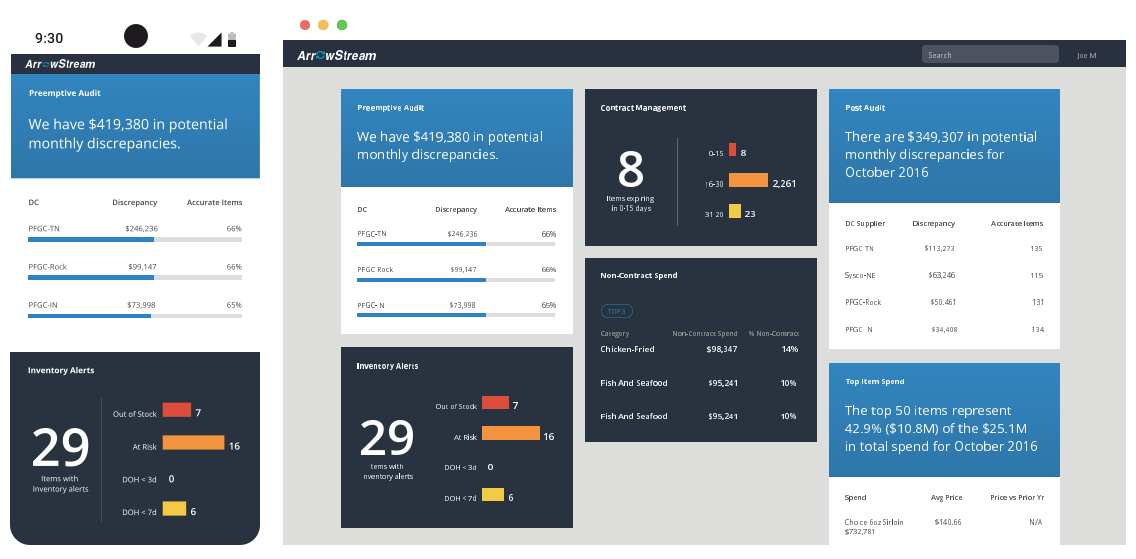
When I arrived, ArrowStream had about 25 employees, fewer than 10 clients, and was valued at less than $10 million. I was the first dedicated product designer they'd ever had. The tools were disconnected, the interfaces felt like spreadsheets online, and there was almost no technical, user, or requirements documentation to work from.
Setting the scene
A few months before I was hired, ArrowStream's founder was killed in a murder-suicide by an employee in the office. The company used the tragedy to reimagine itself.
ArrowStream builds software that allows major food operators, distributors, and manufacturers to manage, analyze, and optimize their supply chains. For years, the industry ran on Excel spreadsheets and fax machines. ArrowStream was bringing it all into a SaaS platform, but the platform looked like it.
My role
Founding Product Designer
I was brought in to implement a design process from scratch and then drive and evolve the product suite. I embedded directly in the engineering department, working daily with developers to ensure what was built matched what was designed.
I wrote Bootstrap-based HTML and CSS for frontend templates myself, then handed off to developers, which meant screen layouts came out the way they were designed and reviewed with users. I worked with the PM and BA to document all research, user journeys, requirements, design iterations, and testing across the platform.
What I designed
- Design system: ArrowStream's first, unifying the fragmented suite under a consistent visual language
- Platform unification: tile-driven dashboard with drag-and-drop customization per user
- Cross-app workflow improvements: progress bars, completion states, messaging systems
- Data-heavy screen management: tabs, hide/expand, progressive disclosure
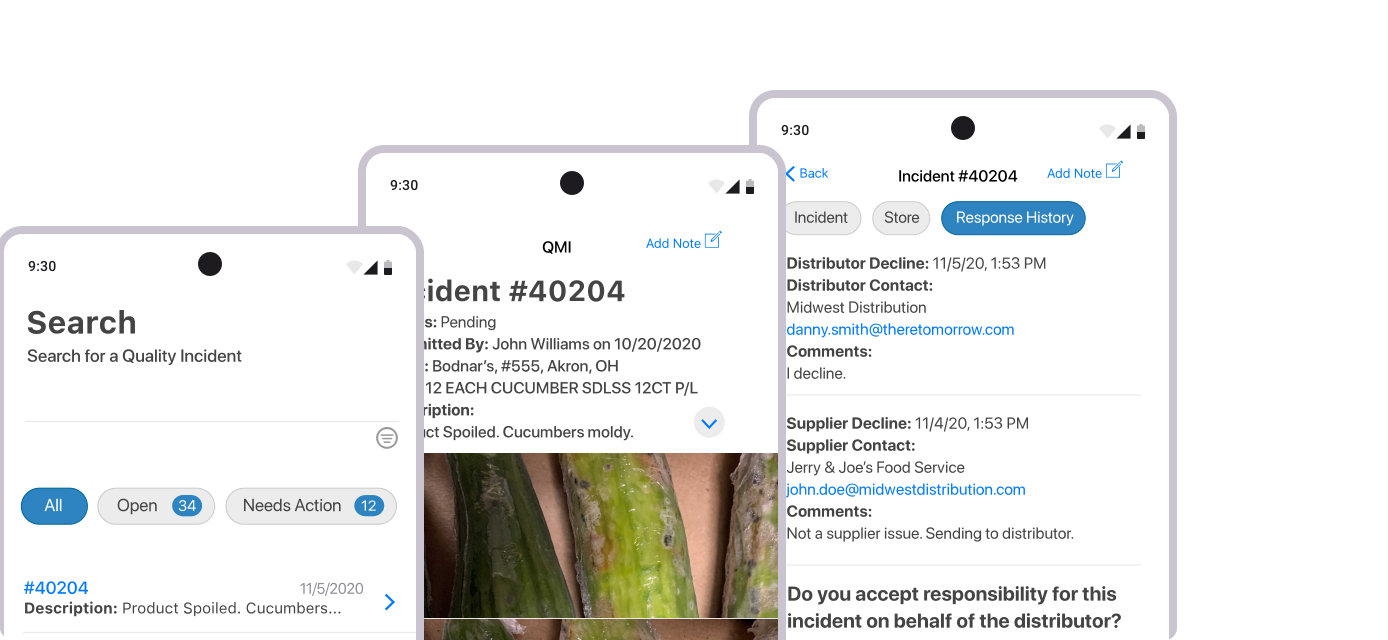
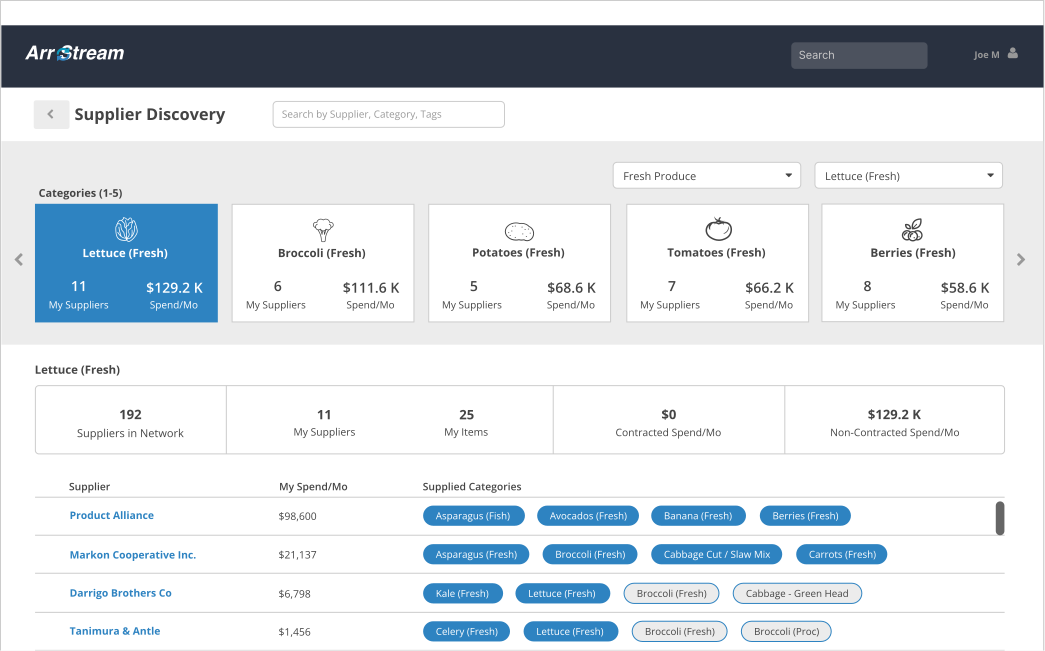
- Supplier Discovery marketplace: RFP creation, new supplier search, A/B tested subscription flow
- QM system, Item Pricing portal, Traceability tool, Strategic Sourcing module
Standout initiative — Supplier Discovery
$5M in buyer savings in the first year.
Buyers and sellers were signing hundreds of contracts a year, but almost always with the same companies. Once a buyer found a supplier they trusted, they rarely looked elsewhere. Part of that was relationship. But part of it was that there had never been an online marketplace where buyers could see pricing from thousands of other suppliers.
I researched the industry, interviewed buyers and sellers, and reviewed usage metrics to find where the opportunity was. Then I architected and designed the Supplier Discovery marketplace, giving buyers the ability to create RFPs and submit them to new suppliers found through the platform. I ran A/B tests on the marketplace screen with a small user group to optimize the subscription offer and checkout flow.
Outcome
Fewer than 10 clients to 250+. Acquired for $100M+.
When I left, ArrowStream was serving 250+ food companies, up from fewer than 10 when I arrived. The company had been acquired twice during my tenure and ultimately sold for more than $100 million. Clients included Shake Shack, Dairy Queen, Arby's, Buffalo Wild Wings, Dunkin' Donuts, Church's Chicken, Subway, and Brinker International.
250+
food companies served at exit
$100M+
acquisition value
$5M
buyer savings in Supplier Discovery year one
120K+
restaurant locations on platform
Lessons
The company's instinct was to give every user everything they asked for. There was never a plan to permission features by user group, so every new tool went to everyone, and legacy apps became impossible to untangle. I should have prioritized that structural issue earlier, before the user base made it exponentially harder to fix.
I also learned that users in this space don't want to be taught. They want to explore, and they'll find their own way if you give them a well-designed space to do it.