
Case Study — amSTATZ · November 2011 – April 2015
Building a health and fitness platform from the ground up, for the way trainers actually work.
I was the first and only product designer at amSTATZ, a Chicago startup founded to solve a real problem: personal trainers were juggling 4–5 different apps to manage scheduling, billing, and communication, and still losing clients between sessions because there was no good way to stay connected outside the gym.
My role
Founding Product Designer
First hire. I determined the usability and design of the full amSTATZ platform and all digital assets. I worked directly with three co-founders, a team of three developers, and one QA consultant.
I helped establish the software development lifecycle, conducted all user and market research, maintained business requirements and user documentation, designed and iterated prototypes, and worked directly with developers to ensure the frontend matched the final designs pixel for pixel.
What I designed
- Design system: visual language, component library, color palette, typography in Sketch
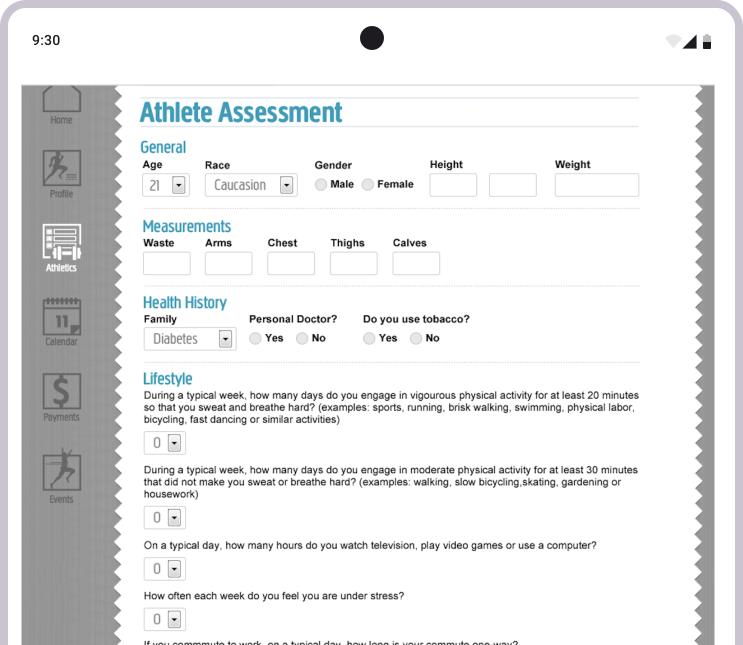
- Workout tracking: personalized templates, in-session logging, health assessment onboarding
- Scheduling and billing: two-way calendar, drag-and-drop booking, built-in payment processing
- Motivation and communication: alerts, notifications, workout instructions, video links
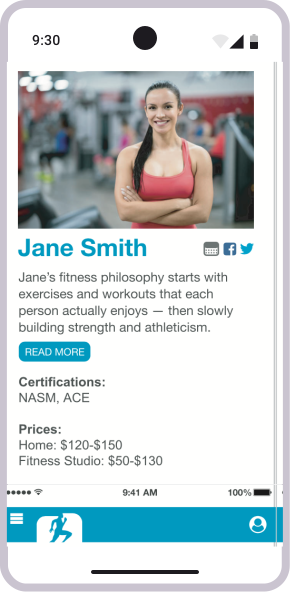
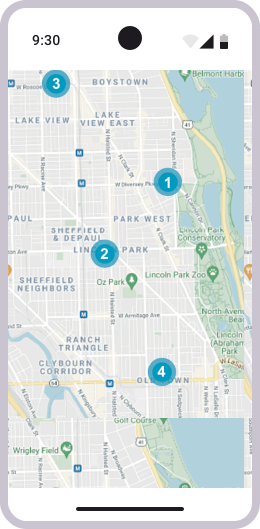
- Trainer profiles: SEO-optimized public profiles listed on the amSTATZ FitMap
- Dashboard: centralized view for client data, calendars, workout history, session notes
The research
Early work happened in gyms, Lincoln Park and Lake View.
I followed personal trainers through their sessions, watching how they recorded data, communicated with clients, and moved through a workout in tight spaces during peak hours. I worked with a consistent group of three trainers, two women and one man, from early research through mockup reviews and UAT.
Trainers were wasting time they wanted to spend with clients managing their business across multiple apps.
The physical space of a gym, always moving with limited surface area, made large inputs on a phone awkward. Larger phones with large tap targets worked best.
Clients wanted to watch workout videos on a TV at home. A responsive framework was the right call.
Outcome
1,000 paying subscribers. $1.35M raised. 53,000+ professionals.
The platform reached 1,000 paying subscribers and 4,000 users in the first six months. In 2013 amSTATZ raised $415,000 in angel funding, 90% from Chicago investors. In 2014 the company closed a $1.35 million funding round with Launch Capital, LionBird, and Indiana Innovation Fund, and partnered with the American Council on Exercise to bring the platform to 53,000+ health and fitness professionals.
1,000
paying subscribers in first 6 months
$1.35M
raised: Launch Capital, LionBird, Indiana Innovation Fund
53,000+
health & fitness professionals via ACE partnership
Lessons
I learned early that every small detail needed to connect back to the overall product, because I'd have to explain it to founders, developers, and users alike. Keeping that micro and macro view simultaneously was what made the work hold together.
I also learned what I'd do differently: I should have spent more time with the lead developer walking through the process, not just handing off designs, but making sure he understood where his team fit in the overall lifecycle so they could stay invested in what they were building, not just in the code.