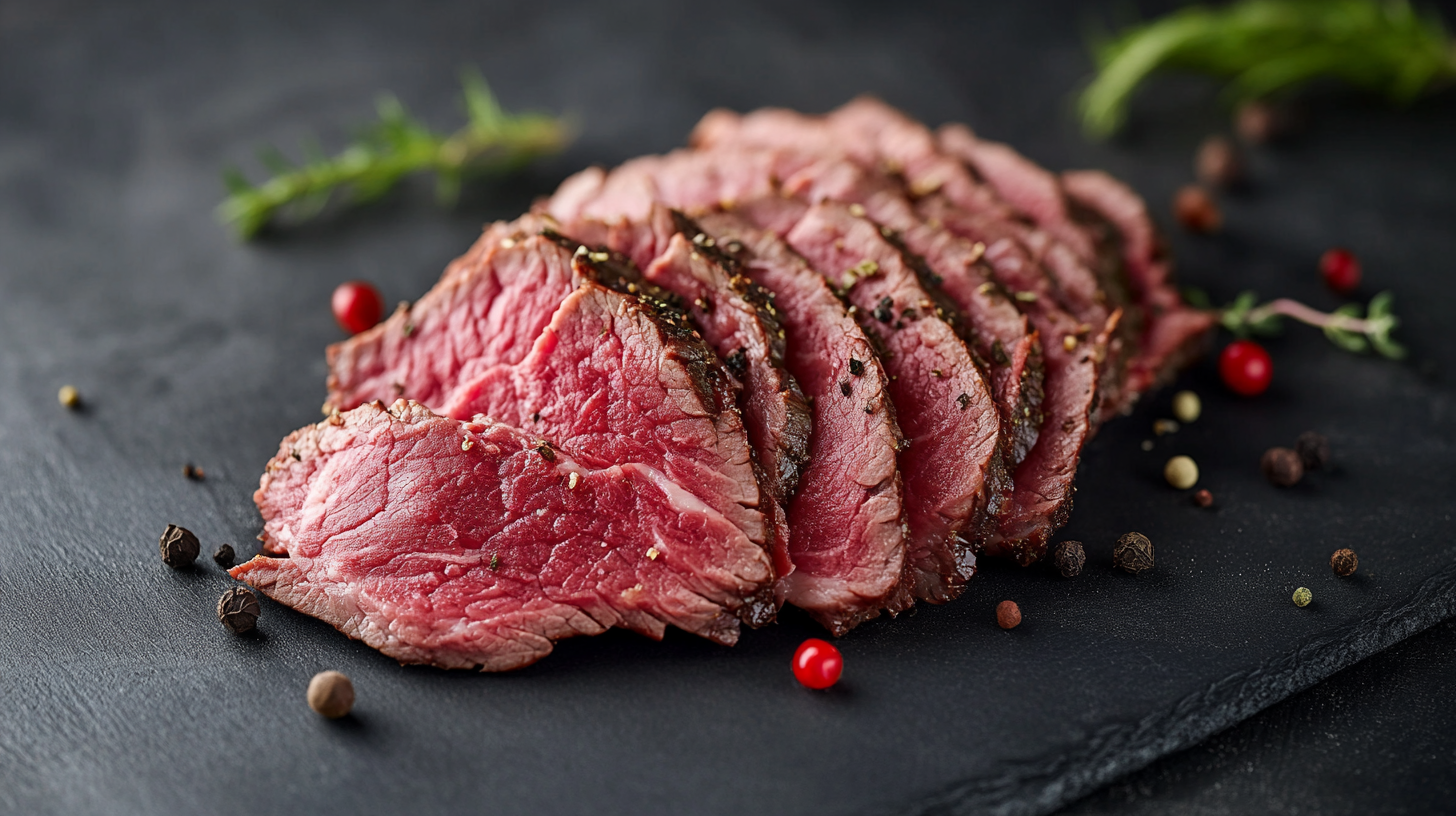
🧬Roast beef is a savory and hearty meat that offers a satisfying flavor profile, largely due to its umami content. With 25 grams of protein per 100 grams, it supports muscle maintenance and may help prevent anemia through its iron-rich composition. Research suggests that the dopamine boost associated with consuming this dish can enhance mood stability, making it a comforting choice for many.
🧑🍳When preparing grass-fed roast beef, it's crucial to cook it at lower temperatures to avoid toughness, as this type of beef is leaner. For tougher cuts, using moist heat methods like braising can help retain moisture and tenderness. Additionally, resting the meat longer after cooking allows it to retain its juices, resulting in a more succulent final dish.
This post contains affiliate links.
About this article
Foodbe.ai exists to inform consumers about the food they buy and eat. Every claim is cited. Sources: NIH, USDA, FDA, Smithsonian, and JSTOR. Found an error? Email us at admin@foodbe.ai to report any source or fact issues.