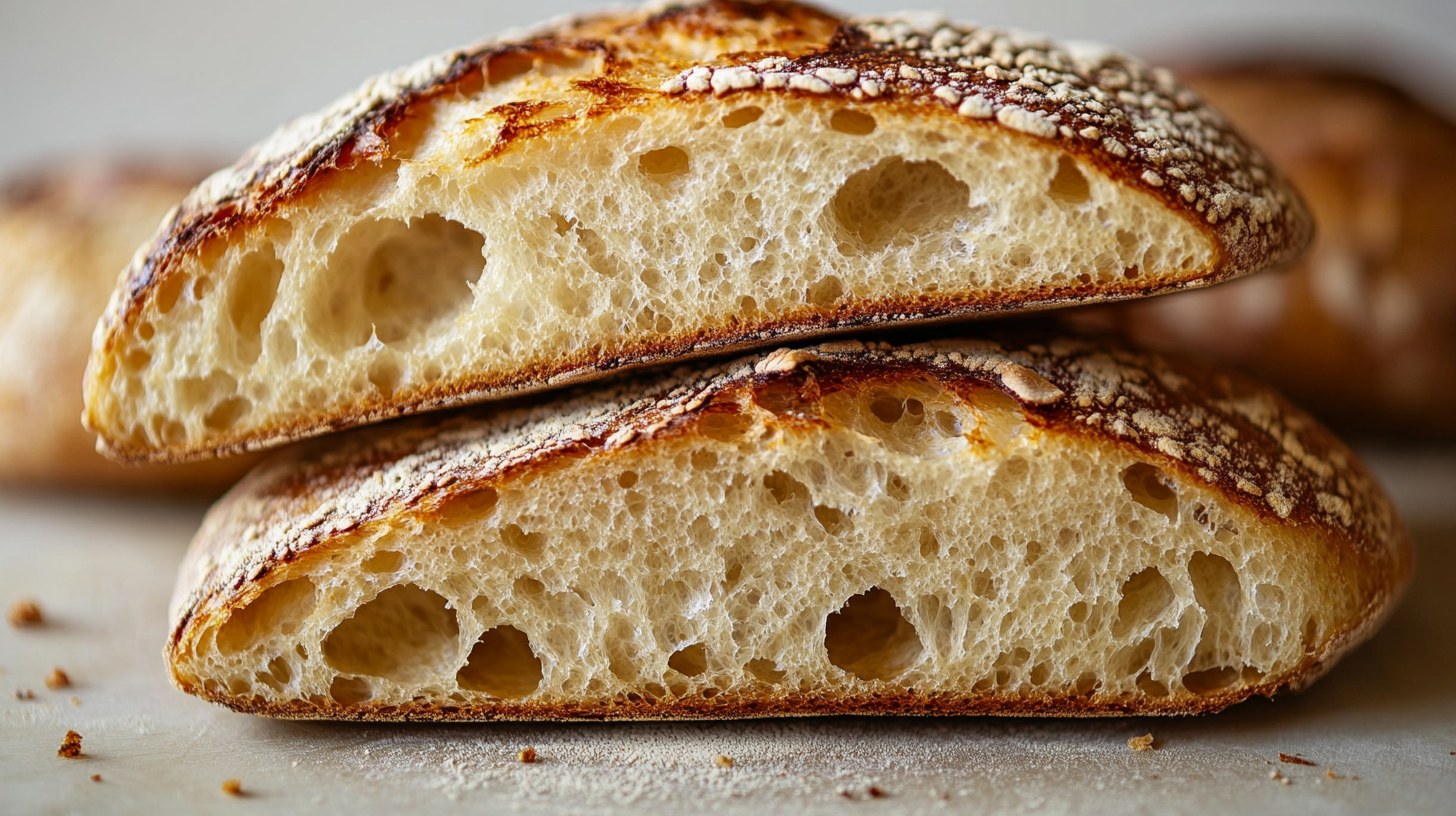
🧬Sourdough bread is not only a culinary delight but also a potential ally for gut health, thanks to its fermentation process that enhances fiber content and may support serotonin levels in the body. With about 1.5 grams of fiber per 100 grams, this tangy, chewy bread can contribute positively to digestive well-being. The unique combination of its crusty exterior and soft interior provides a comforting experience that many find satisfying.
🧑🍳For the best results when baking sourdough, using a Dutch oven can significantly improve the crust's quality by trapping steam during the initial baking phase. This technique mimics the steam injection of professional ovens, creating that desirable crackling crust. Additionally, scoring the dough before baking allows for controlled expansion, ensuring a beautifully shaped loaf. Proper technique is essential for achieving the perfect sourdough.
This post contains affiliate links.
About this article
Foodbe.ai exists to inform consumers about the food they buy and eat. Every claim is cited. Sources: NIH, USDA, FDA, Smithsonian, and JSTOR. Found an error? Email us at admin@foodbe.ai to report any source or fact issues.