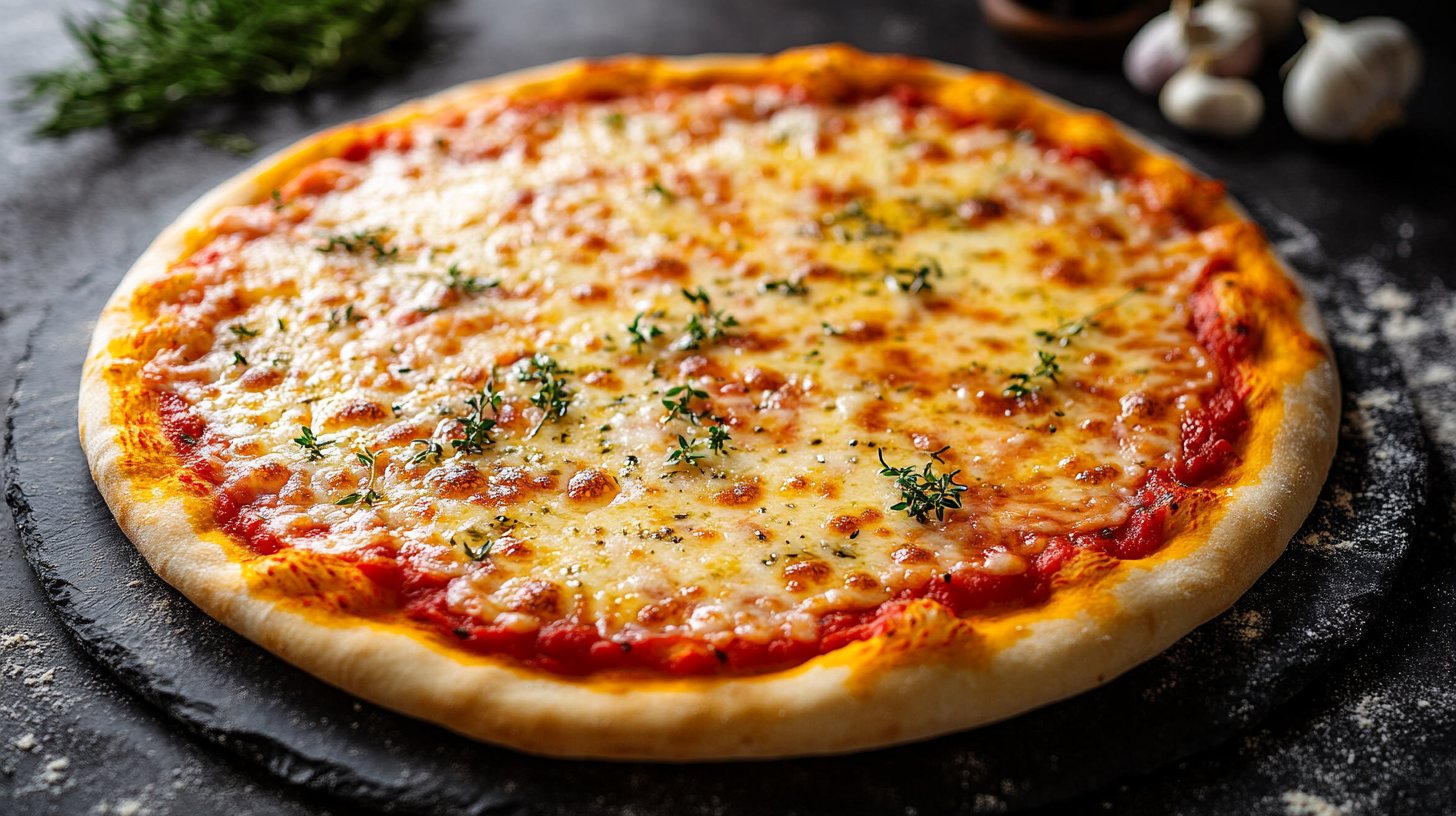
🧬Pizza is a savory delight that offers a significant energy boost, packing around 2120 calories per 100 grams. The combination of cheese and refined grains can trigger the brain's reward signals, potentially supporting serotonin and dopamine levels, which may enhance mood and provide comfort. However, its processed nature and high sodium content, at 5120 mg, could be irritating for some digestive systems.
🧑🍳When preparing pizza, achieving the perfect crust requires using an oiled steel pan instead of cast iron, which can lead to better browning. For a crispy finish, press the cheese all the way to the edges of the pan to create a frico effect. Remember to add the sauce after baking to maintain the integrity of the crust and enhance the overall flavor.
This post contains affiliate links.
About this article
Foodbe.ai exists to inform consumers about the food they buy and eat. Every claim is cited. Sources: NIH, USDA, FDA, Smithsonian, and JSTOR. Found an error? Email us at admin@foodbe.ai to report any source or fact issues.