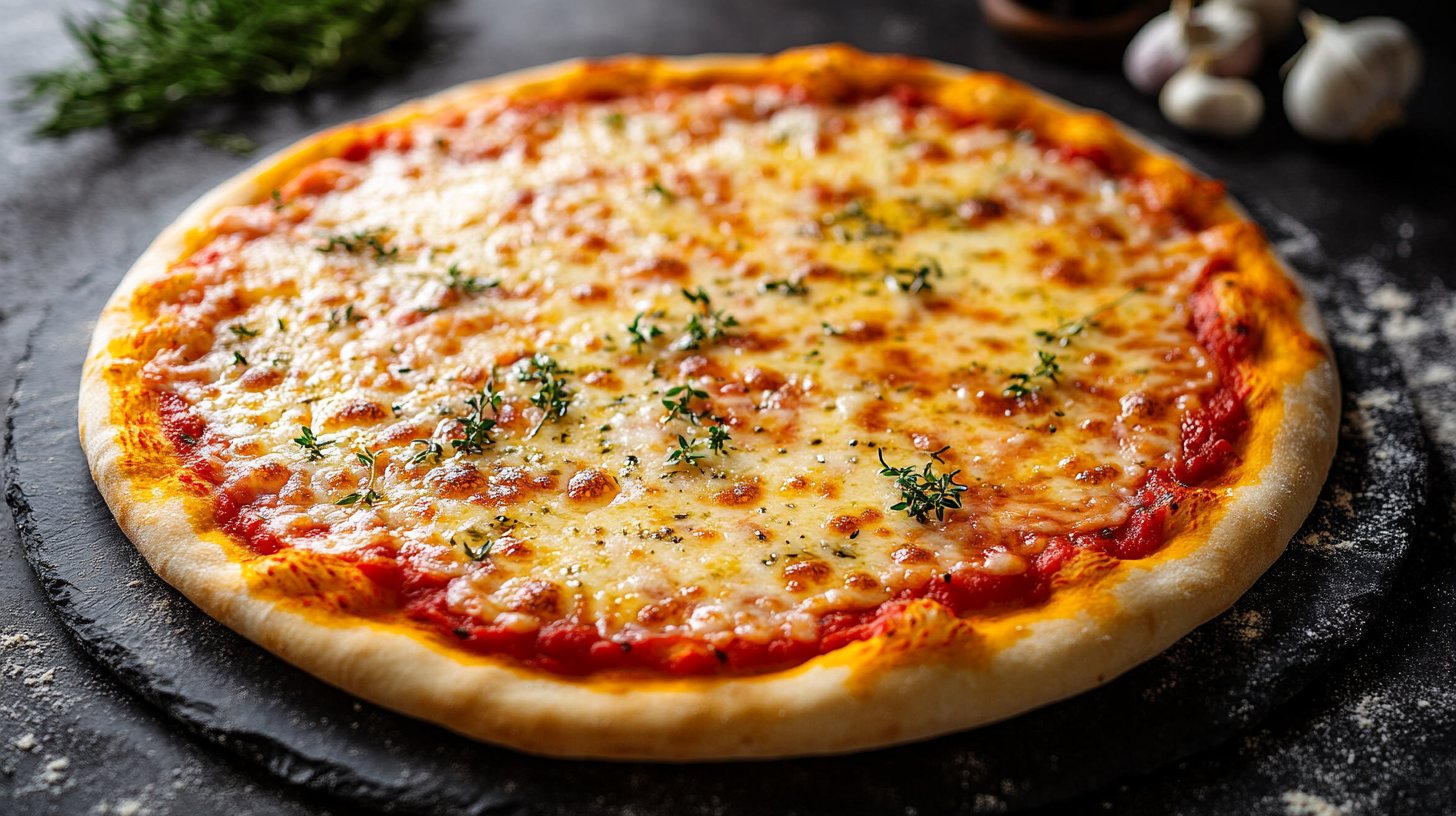
🧬Cheese pizza serves as a comforting staple, delivering a savory flavor profile that many find nostalgic. With 91.2 grams of protein per 100 grams, it offers a substantial source of energy and supports muscle maintenance. The presence of calcium also plays a role in promoting bone health, while the combination of carbohydrates and fats can trigger a dopamine spike, contributing to feelings of reward and satisfaction.
🧑🍳In the kitchen, achieving the perfect cheese pizza requires attention to detail. Pressing the cheese all the way to the pan edges creates a delightful frico, enhancing texture and flavor. Using an oiled steel pan instead of cast iron ensures a properly crisp crust, and remember to add the sauce after baking to preserve its freshness and vibrancy.
This post contains affiliate links.
About this article
Foodbe.ai exists to inform consumers about the food they buy and eat. Every claim is cited. Sources: NIH, USDA, FDA, Smithsonian, and JSTOR. Found an error? Email us at admin@foodbe.ai to report any source or fact issues.