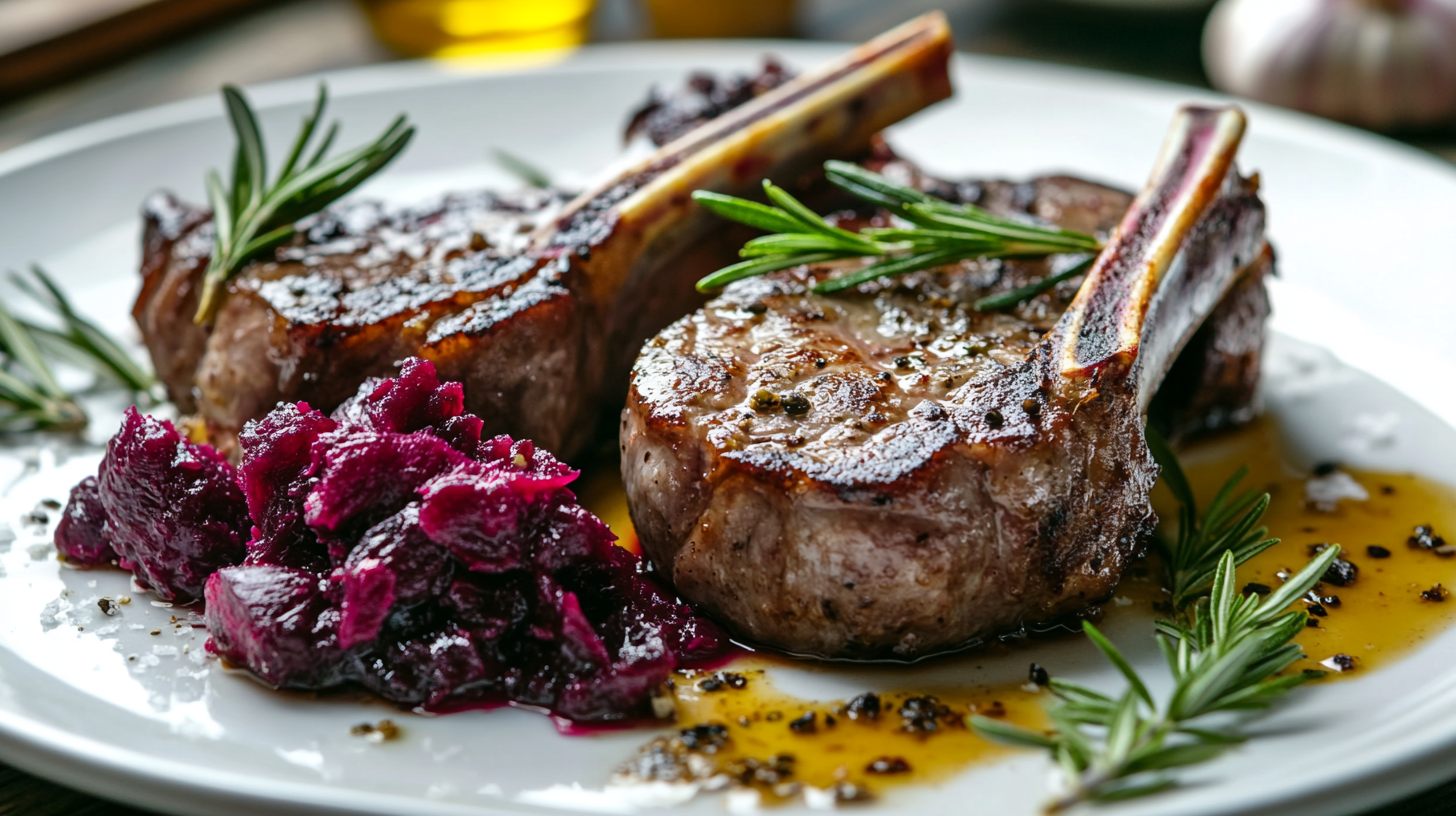
Seared Lamb Chops with Fermented Beet Relish & Rosemary
👨🍳 Chefy Tip: Chops should release cleanly from the pan when they're ready to flip — if they stick, the crust isn't formed. Baste continuously with the butter, garlic, and rosemary during the last 60 seconds of cooking. Rest the chops on a warm plate, not a cold one — resting on a cold surface pulls heat away.
Flavor Profile
Ingredients
 Shop ingredients
Instructions
Make the relish first: combine diced fermented beets, shallot, lemon zest, lemon juice, extra virgin olive oil, and chopped mint in a bowl. Season with a pinch of salt. Set aside at room temperature — the flavors develop as it sits.
Pat lamb chops completely dry with paper towels. Season generously on all sides with kosher salt and black pepper. Let sit at room temperature 10 minutes before cooking.
Heat a cast iron skillet over high heat until smoking. Add olive oil. Place lamb chops in the pan — don't crowd them, work in batches if needed. Sear 3-4 minutes per side for medium-rare (130°F internal). Don't move them while they sear — the crust comes from contact time.
In the last minute of cooking, add smashed garlic, rosemary sprigs, and butter to the pan. Tilt the pan and baste the chops with the foaming rosemary butter — spoon it over the top of each chop repeatedly for 30-45 seconds.
Transfer chops to a cutting board and rest 5 minutes. The temperature will rise another 5 degrees as they rest.
Plate the chops with a generous spoonful of fermented beet relish beside them. Drizzle any pan juices over the lamb. Finish with flaky sea salt and a sprig of fresh rosemary.
Lamb is one of the richest dietary sources of vitamin B12, which is essential for maintaining the myelin sheath — the protective coating around nerve fibers that enables fast signal transmission. Fermented beets provide dietary nitrates that the body converts to nitric oxide, increasing blood flow including to the brain. The fermentation process also produces live probiotic cultures that support the gut microbiome. Carnosic acid in rosemary has been studied for potential memory-related effects and neuroprotective properties.