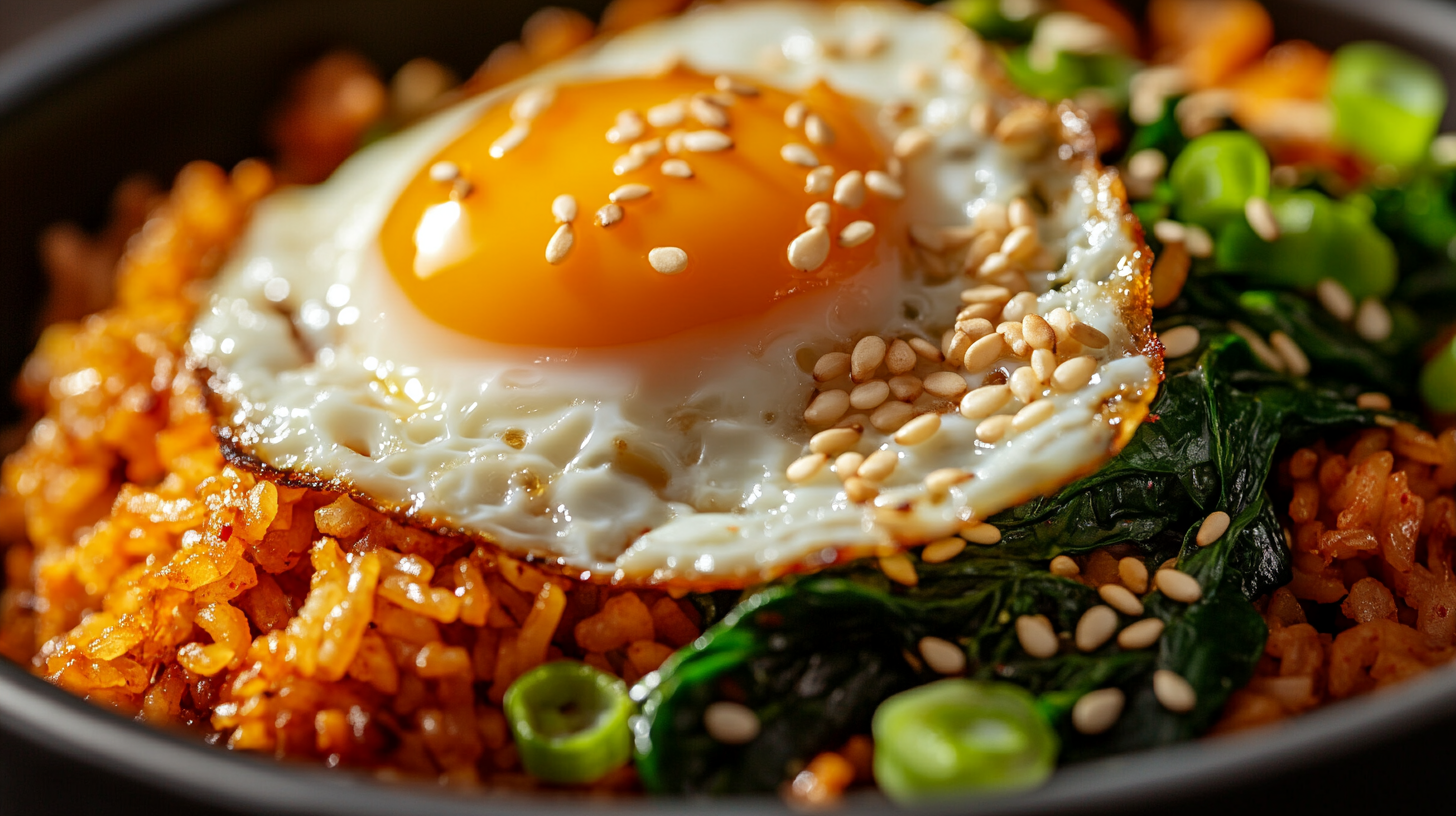
Kimchi Fried Rice with Soft Egg & Sesame Greens
👨🍳 Chefy Tip: Push the rice to one side, cook the kimchi and garlic separately for 30 seconds before mixing — builds flavor in layers instead of steaming everything at once. Add the reserved kimchi liquid last and scrape the pan hard — the fond is where the depth lives.
Flavor Profile
Ingredients
 Shop ingredients
Instructions
Heat neutral oil in a large skillet or wok over high heat until smoking. Add the cold rice in an even layer and let it sit without stirring for 2 minutes — you want the bottom to get crispy. Then break it up and stir.
Push rice to one side. Add garlic and chopped kimchi to the empty side and cook 1 minute until fragrant. Add the reserved kimchi liquid, gochujang, and soy sauce. Stir everything together and cook 2 more minutes until the rice is evenly coated and slightly caramelized.
Drizzle sesame oil over the rice, toss once, then divide between two bowls.
In the same pan, fry two eggs sunny-side up — cook until the whites are set but the yolks are still completely runny. Place one egg on top of each bowl.
Toss greens with sesame oil and rice vinegar. Pile next to the egg. Top with toasted sesame seeds and sliced scallions. Serve immediately.
About 90% of the body's serotonin is produced in the gut, not the brain, which is why gut microbiome health directly influences mood. Kimchi's lactobacillus cultures are among the most studied probiotics for gut-brain communication. Egg yolks are one of the richest dietary sources of choline — a precursor to acetylcholine, the neurotransmitter involved in memory and learning. Folate from dark leafy greens is required for the synthesis of dopamine and serotonin.