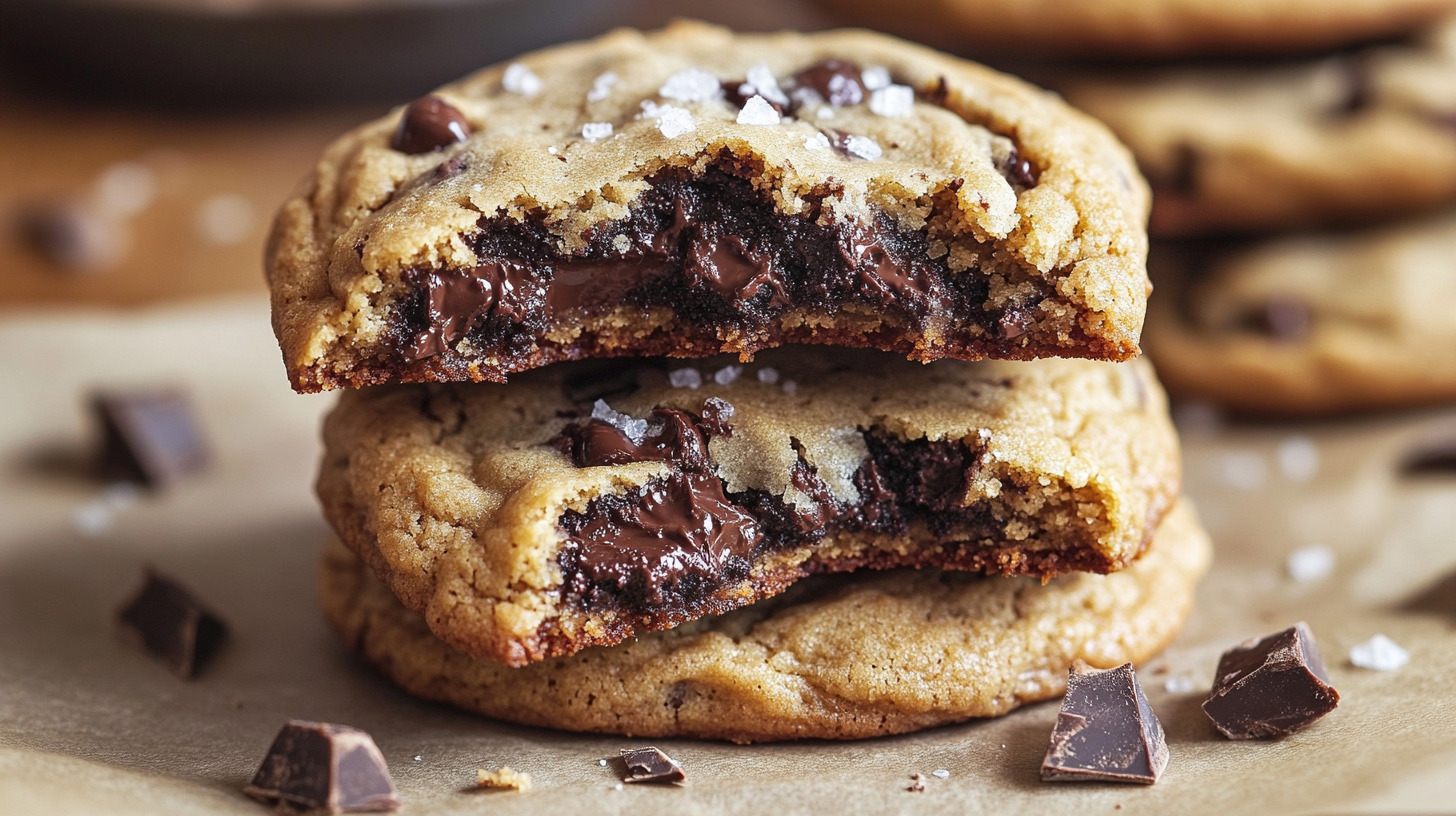
Brown Butter Bourbon Chocolate Chip Cookies with Rye & Smoked Salt
👨🍳 Chefy Tip: Brown butter in a light pan so you can see the solids — dark amber, not black. Transfer immediately or it keeps cooking in the hot pan and goes bitter. Chill the browned butter until it's soft but holds shape — if it's liquid the dough spreads flat in the oven.
Flavor Profile
Ingredients
 Shop ingredients
Instructions
Brown the butter: melt butter in a light-colored saucepan over medium heat, swirling occasionally, until the milk solids turn golden brown and it smells nutty — about 6 minutes. Pour into a large bowl and refrigerate for 20 minutes until it's the consistency of soft peanut butter — solid but scoopable. This is critical — if it's liquid the dough will be too thin.
While butter cools, whisk together both flours, baking soda, and kosher salt in a separate bowl. Set aside.
Add both sugars to the cooled brown butter and beat with a hand mixer or wooden spoon until smooth and slightly fluffy — about 2 minutes. Add eggs one at a time, mixing after each. Stir in vanilla and bourbon.
Add the flour mixture to the wet ingredients. Fold with a spatula until just combined — don't overmix or the cookies get tough. Fold in the dark chocolate chunks.
Scoop dough into balls (about 2 tablespoons each) and place on parchment-lined sheet pans, 2 inches apart. Press a few extra chocolate chunks into the top of each one so they're visible. Sprinkle each cookie with a pinch of smoked sea salt flakes.
Bake at 375°F for 10-12 minutes until the edges are golden but the centers still look slightly underdone. They'll firm up as they cool — pulling them early is the whole move.
Let cool on the pan for 5 minutes, then transfer to a wire rack. The centers will set into that perfect chewy texture as they rest.
Rye flour contains less gluten than wheat flour, which is why it produces a more tender, less chewy cookie — the opposite of what most people expect from a hearty grain. The pentosans (water-soluble fibers) in rye also absorb more moisture than wheat starch, keeping the interior of the cookie softer for longer. Brown butter works because heating butter past 250°F triggers the Maillard reaction in the milk solids, creating the same nutty, caramelized flavor compounds found in toasted bread and seared steak.