June 4, 2026
Why is collagen in food and supplements?
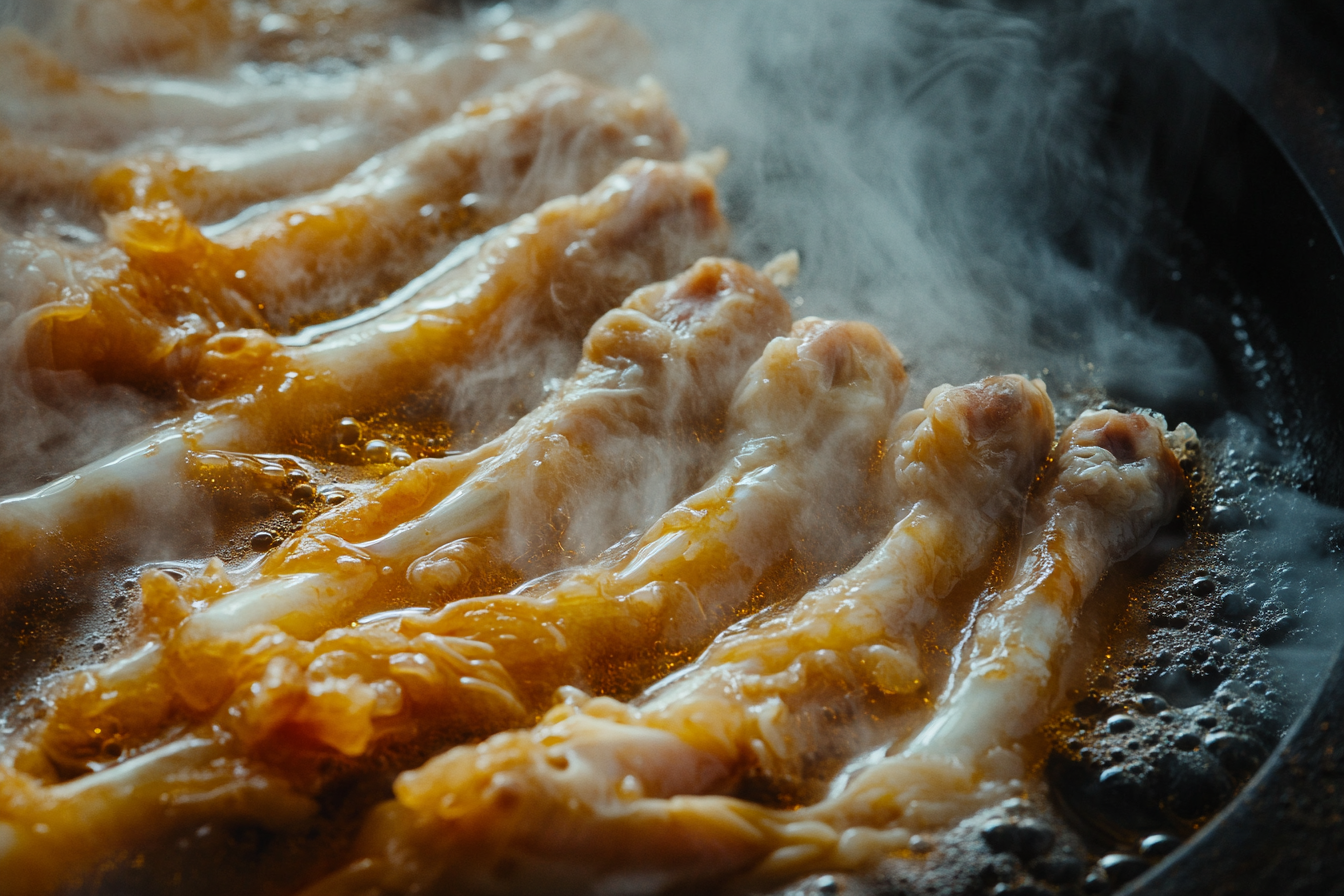
When 🍗 chicken feet float in a simmering pot, the translucent pads slowly surrender their gelatin, transforming the broth into a liquid that gels when chilled. This is collagen in its culinary form: gelatin — delivered through cooking rather than a capsule.
Meta-analyses of randomized controlled trials have found that hydrolyzed collagen supplementation can improve skin hydration and elasticity versus placebo. The honest caveat is that most trials are short (4–12 weeks), conducted primarily in women, many are industry-funded, and a 2025 meta-analysis found that non-industry-funded and high-quality studies showed no significant effect.
Orally ingested hydrolyzed collagen is absorbed partly as intact di- and tripeptides — the dipeptide Pro-Hyp appears in circulating blood approximately 60–120 minutes after ingestion. In cell culture studies using cultured human dermal fibroblasts, Pro-Hyp at 200 nmol/mL enhanced cell proliferation 1.5-fold and hyaluronic acid synthesis 3.8-fold via upregulation of hyaluronan synthase 2 (HAS2) mRNA.
Cooking bones, skin, and connective tissue into broths and gels is an old food practice across many traditions.
Powdered gelatin was first patented in 1845, and the 1897 creation of Jell-O helped turn collagen-derived products from a labor-intensive kitchen process into a mass-market pantry staple.
When collagen-rich connective tissue is heated in water, the triple helix unwinds, dissolves into the liquid, and sets as a gel when cooled. Stock that gels firmly when chilled has adequate gelatin for sauces, braises, and aspics.
This post contains affiliate links.
About this article
Foodbe.ai exists to inform consumers about the food they buy and eat. Every claim is cited. Sources: NIH, USDA, FDA, Smithsonian, and JSTOR. Found an error? Email us at admin@foodbe.ai to report any source or fact issues.