June 4, 2026
Why does gut health affect mood?
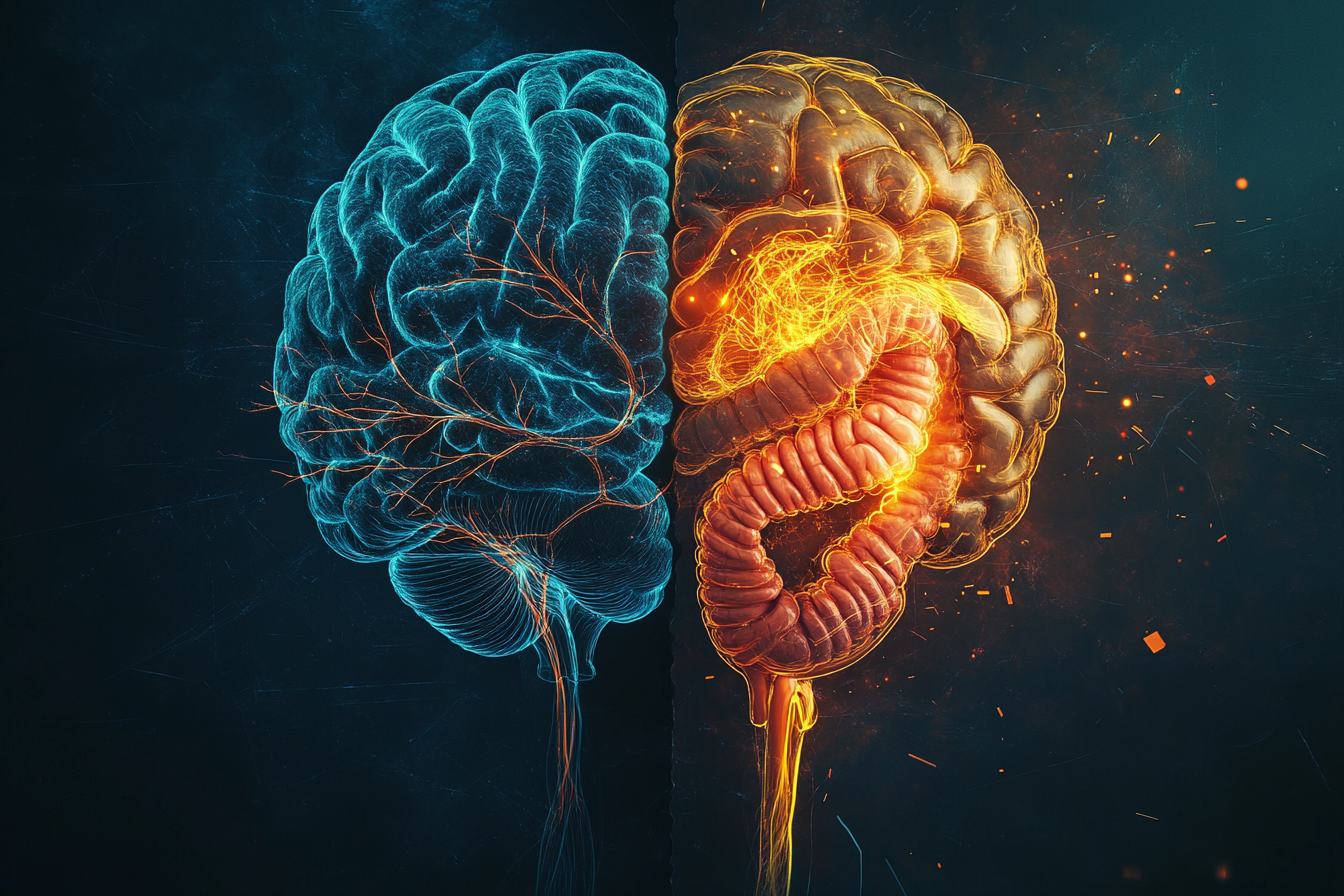
The bathroom is three feet from where you sit, and the brain still doesn't know what's coming. The vagus nerve carries signals from the gut to the brain continuously — and gut bacteria and their metabolites can influence that signaling. Brain regions involved in gut-brain signaling include areas tied to emotion and stress regulation.
Roughly 90% of the body's peripheral serotonin is produced in the gut by enterochromaffin cells. That serotonin regulates intestinal movement and may influence vagal signaling to the brain, though gut-produced serotonin does not directly cross into the brain. The relationship is bidirectional — the brain also affects gut function through these same pathways.
The gut contains the enteric nervous system — a network of roughly 200–600 million neurons that operates largely independently of the brain. Its activity can be shaped by the gut microbiome, which may partly explain why microbial composition changes with stress and anxiety. New sequencing technologies have allowed researchers to move from correlative studies toward mechanistic explorations of the microbiota-gut-brain axis.
This post contains affiliate links.
About this article
Foodbe.ai exists to inform consumers about the food they buy and eat. Every claim is cited. Sources: NIH, USDA, FDA, Smithsonian, and JSTOR. Found an error? Email us at admin@foodbe.ai to report any source or fact issues.