June 4, 2026
Why do fermented foods help digestion?
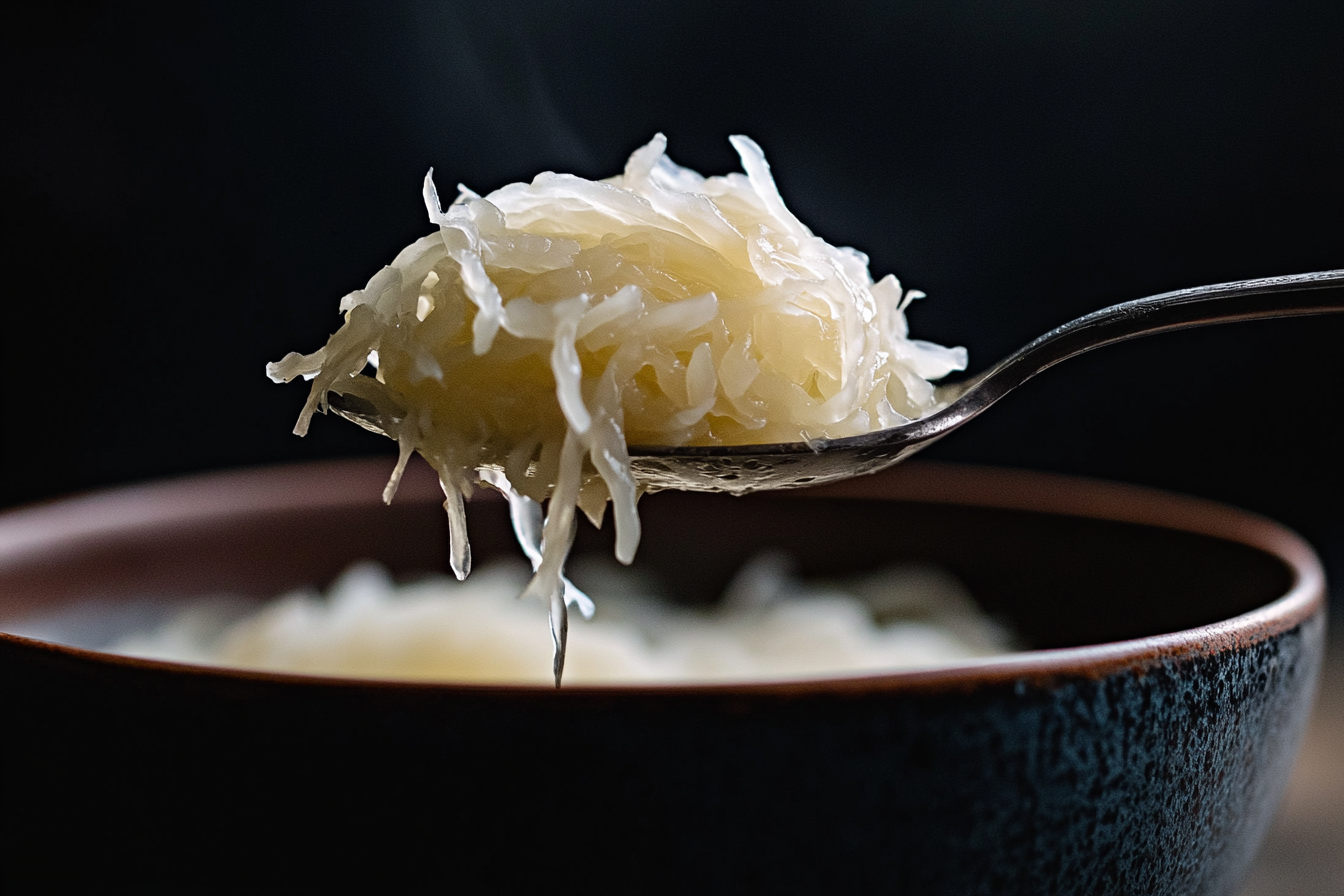
A spoonful of 🥬 sauerkraut at the edge of the plate does more than add crunch. Fermentation changes the food before it reaches the stomach, creating acids and other compounds that shape flavor, preservation, and digestibility.
Lactate produced by lactic acid bacteria can be converted by other gut microbes into short-chain fatty acids including butyrate through microbial cross-feeding — and butyrate serves as primary fuel for colonocytes and supports intestinal barrier integrity. This is why the microbiome's ability to produce butyrate is often discussed in gut health research.
Fermentation changes some food compounds before digestion begins, which may make certain fermented foods easier for some people to tolerate. Some fermentation microbes produce neuroactive compounds such as GABA that may participate in gut-brain signaling pathways, which is one reason fermented foods are being studied in relation to mood and cognitive function.
The modern probiotics industry formalized traditional fermented food wisdom commercially — but many of the same kinds of microbes still live in traditional fermented foods like 🥬 sauerkraut, 🥬 kimchi, and yogurt. Pasteurization and industrial processing changed which bacteria survive.
🥬 Sauerkraut and 🥬 kimchi labeled raw, unpasteurized, or containing live active cultures are more likely to contain live microbes. Many shelf-stable or pasteurized fermented foods do not. Yogurt and 🥛 kefir with live active cultures remain among the most reliable widely available sources of probiotic bacteria in many countries.
This post contains affiliate links.
About this article
Foodbe.ai exists to inform consumers about the food they buy and eat. Every claim is cited. Sources: NIH, USDA, FDA, Smithsonian, and JSTOR. Found an error? Email us at admin@foodbe.ai to report any source or fact issues.