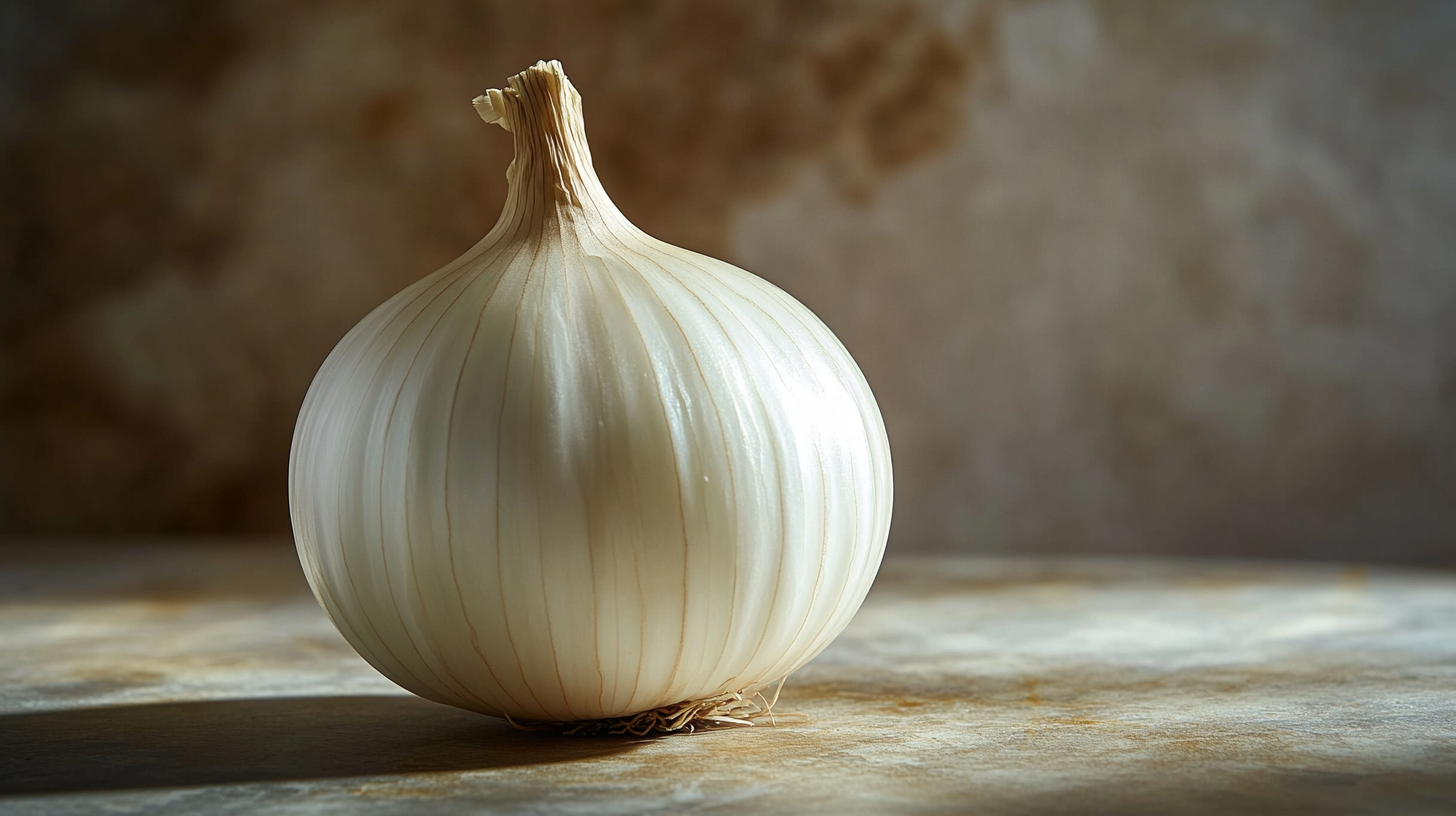
🧬White onions are known for their sharp, pungent flavor, which can add a distinctive kick to various dishes. With about 40 calories per 100 grams, they are low in calories while providing prebiotic benefits that may support gut health. Additionally, their anti-inflammatory properties have been highlighted in research, suggesting that incorporating white onions into your diet could contribute to overall wellness.
🧑🍳In the kitchen, white onions are versatile and can be used as a base ingredient in many recipes. They caramelize beautifully, developing a sweet complexity when cooked slowly, while their sharpness can cut through richer dishes when sautéed. For best results, consider using them in both raw and cooked forms to fully appreciate their flavor profile.
This post contains affiliate links.
About this article
Foodbe.ai exists to inform consumers about the food they buy and eat. Every claim is cited. Sources: NIH, USDA, FDA, Smithsonian, and JSTOR. Found an error? Email us at admin@foodbe.ai to report any source or fact issues.