June 4, 2026
What foods actually feed gut bacteria?
The burp of cold coffee and the last bite of almond biscotti — that is the most realistic delivery system for prebiotics most people have. Many foods that feed gut bacteria contain fiber the human small intestine cannot break down, and that includes many foods people are already comfortable eating.
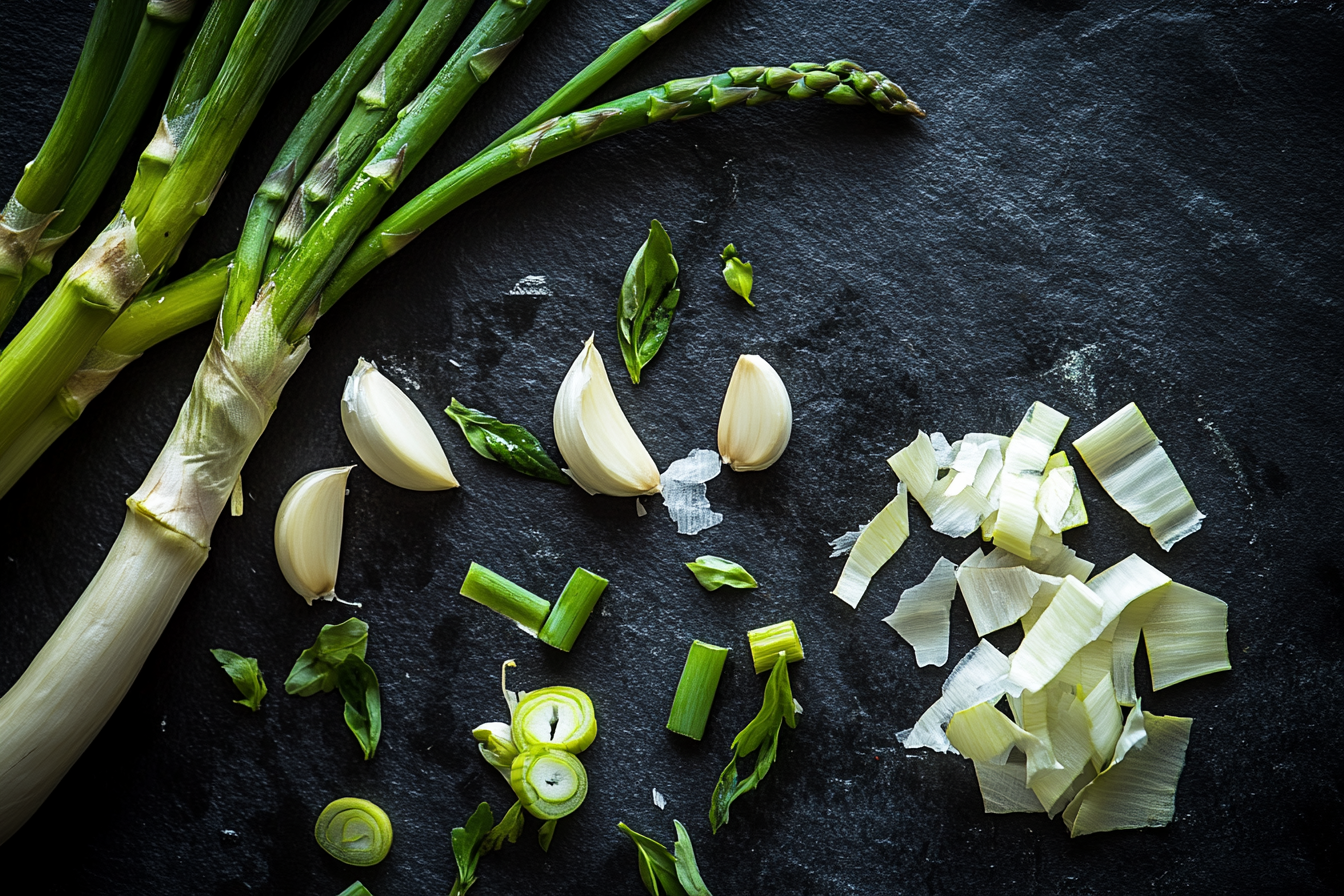
🧄 Garlic, onions, leeks, 🌿 asparagus, Jerusalem artichokes — these are some of the highest-inulin foods in a typical kitchen, and cooking them normally doesn't destroy the prebiotic fiber. Add them to the base of sauces, soups, and braises and you're delivering prebiotic fiber as a baseline of everyday cooking, not as a separate supplement.
Resistant starch is a second major bacterial fuel source. Starchy foods like potatoes, rice, and legumes that are cooked and then cooled develop resistant starch as the starch chains retrograde during cooling, forming a structure that resists digestion in the small intestine and reaches the colon available for fermentation.
Different fiber types selectively stimulate different bacterial species. Inulin-type fructans consistently increase Bifidobacterium abundance; resistant starch has been shown in some studies to increase SCFA production and enrich some fiber-fermenting bacteria, including butyrate-associated species; beta-glucan from 🌾 oats and 🌾 barley has been associated with increases in Bifidobacterium and other fermenting bacteria.
This post contains affiliate links.
About this article
Foodbe.ai exists to inform consumers about the food they buy and eat. Every claim is cited. Sources: NIH, USDA, FDA, Smithsonian, and JSTOR. Found an error? Email us at admin@foodbe.ai to report any source or fact issues.