June 4, 2026
👖 What are the best small meals on GLP-1?
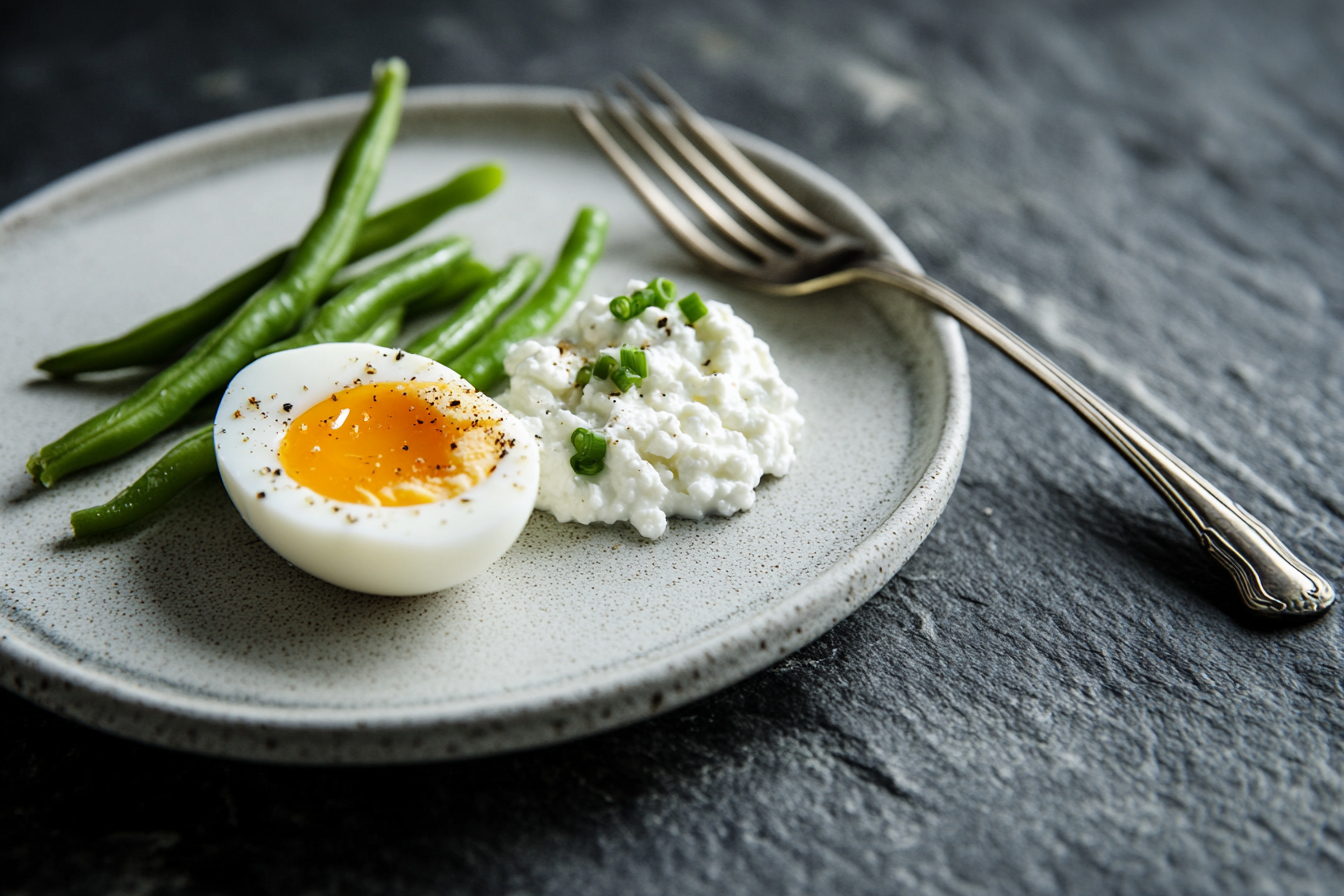
Three bites in and it's over. The stomach is full, the fork is down, and dinner is done whether you planned it that way or not.
That's not a side effect. That's the whole mechanism — GLP-1 medications slow gastric emptying and suppress hunger signaling so completely that eating becomes a different activity than it used to be. The challenge isn't appetite anymore. It's making sure what little goes in actually counts.
Protein goes on the plate first — 🥚 eggs, 🥛 Greek yogurt, canned fish, 🥣 cottage cheese, lentils. Research suggests protein is associated with increased release of CCK and PYY from the gut, supporting satiety hormone signaling. By the time fullness arrives you've usually covered the highest-priority nutrient first.
A little fiber from vegetables or legumes helps keep digestion moving without taking up too much space. Fiber feeds gut bacteria that produce short-chain fatty acids which research indicates may influence GLP-1 secretion from the gut lining. The medication and dietary fiber both influence fullness and gut signaling, though through different mechanisms.
Higher-fat meals may slow digestion further on GLP-1 and can worsen nausea for some people. Keeping fat moderate tends to feel more comfortable.

This post contains affiliate links.
About this article
Foodbe.ai exists to inform consumers about the food they buy and eat. Every claim is cited. Sources: NIH, USDA, FDA, Smithsonian, and JSTOR. Found an error? Email us at admin@foodbe.ai to report any source or fact issues.