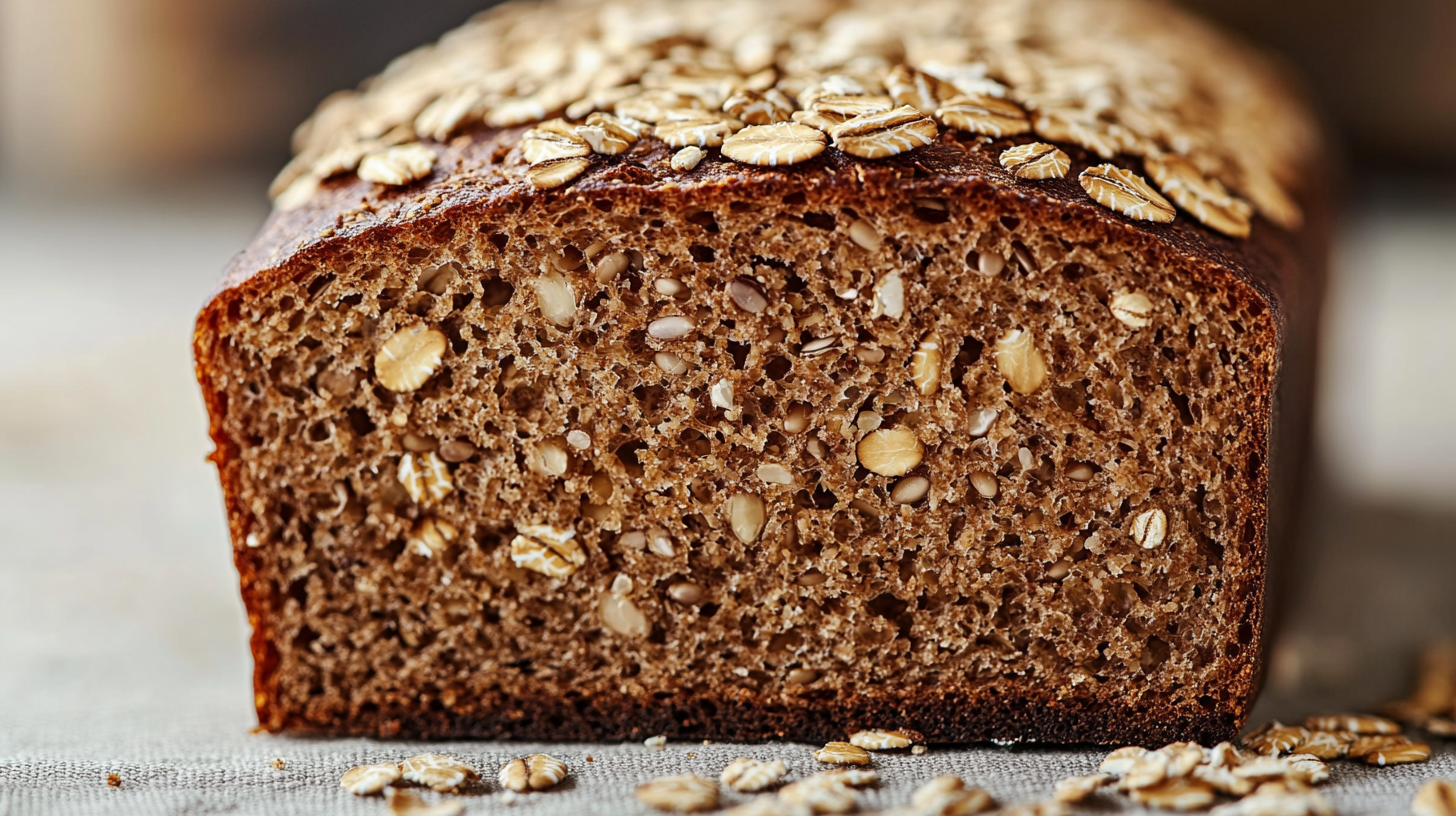
🧬Sprouted grain bread offers a nutty and earthy flavor profile, making it a satisfying choice for those seeking to balance blood sugar and support digestive health. With 5 grams of protein and 3 grams of fiber per 100 grams, this bread can contribute to sustained energy levels while promoting gut health through its whole grain and prebiotic fiber content. Research suggests that the combination of these elements may positively influence the gut-brain axis, potentially enhancing mood and overall well-being.
🧑🍳When baking sprouted grain bread, utilizing a Dutch oven can significantly improve your results by trapping steam during the initial baking phase. This technique replicates the moisture-rich environment of professional ovens, leading to a beautifully crackling crust. Additionally, scoring the dough before baking allows for controlled expansion, ensuring an even rise and a characteristic ear on the loaf. Mastering these techniques can elevate your bread-making skills.
This post contains affiliate links.
About this article
Foodbe.ai exists to inform consumers about the food they buy and eat. Every claim is cited. Sources: NIH, USDA, FDA, Smithsonian, and JSTOR. Found an error? Email us at admin@foodbe.ai to report any source or fact issues.