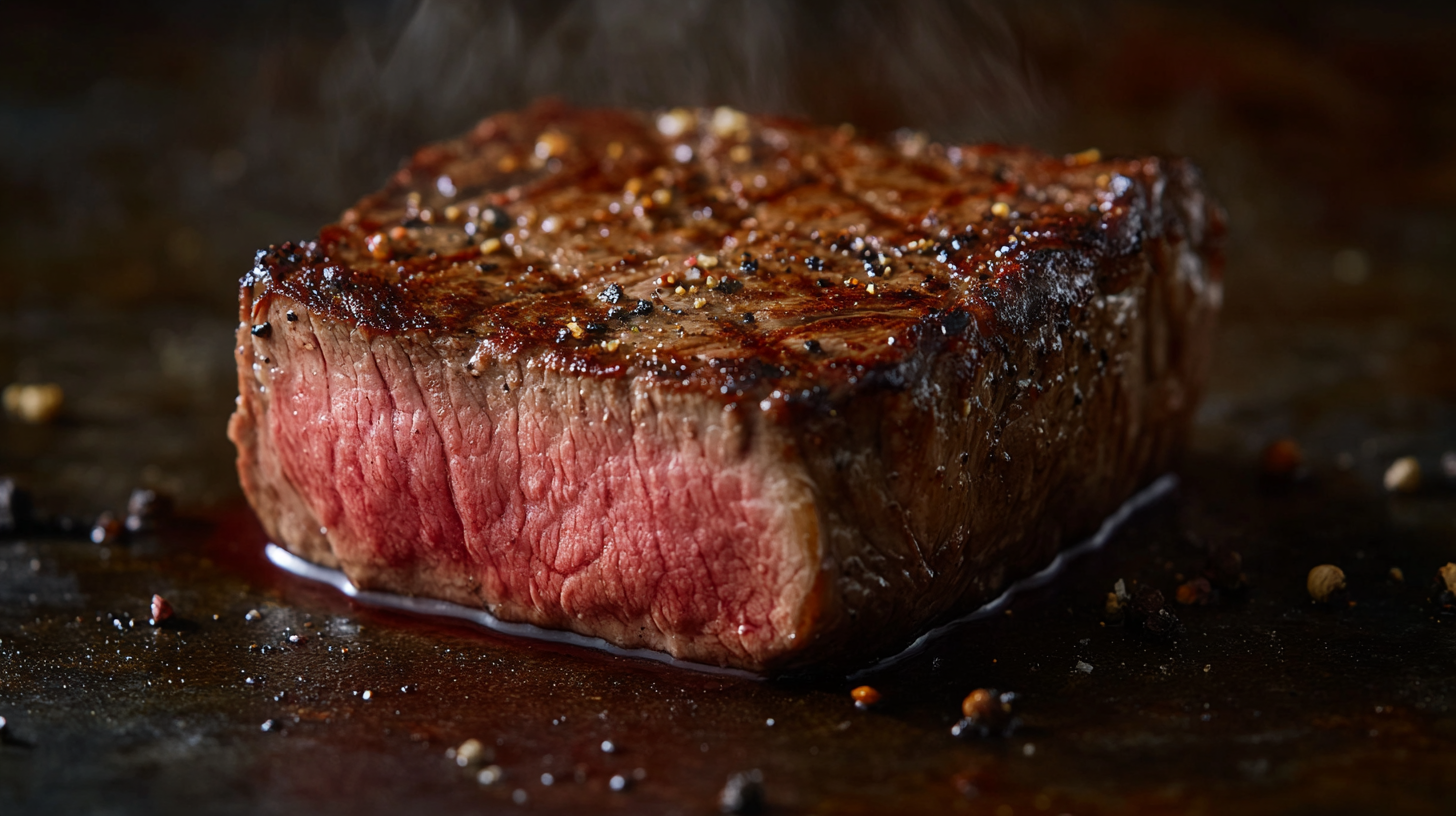
🧬Sirloin steak is a prime source of protein, offering about 26 grams per 100 grams, which plays a crucial role in muscle repair and overall health. This cut is not only tender and juicy but also provides a significant amount of iron, essential for maintaining energy levels. Additionally, its low fiber content means it is easily digestible, making it a suitable option for those focusing on animal protein in their diets.
🧑🍳For achieving the perfect sirloin steak, the reverse sear method is highly recommended. Start by seasoning the steak and cooking it in a low-temperature oven until it reaches an internal temperature of 115–120°F, then finish with a quick sear in a hot cast iron pan to develop a rich, flavorful crust. Ensuring the steak is completely dry before cooking is key to achieving that coveted Maillard crust, so pat it down thoroughly and allow it to rest after seasoning.
This post contains affiliate links.
About this article
Foodbe.ai exists to inform consumers about the food they buy and eat. Every claim is cited. Sources: NIH, USDA, FDA, Smithsonian, and JSTOR. Found an error? Email us at admin@foodbe.ai to report any source or fact issues.