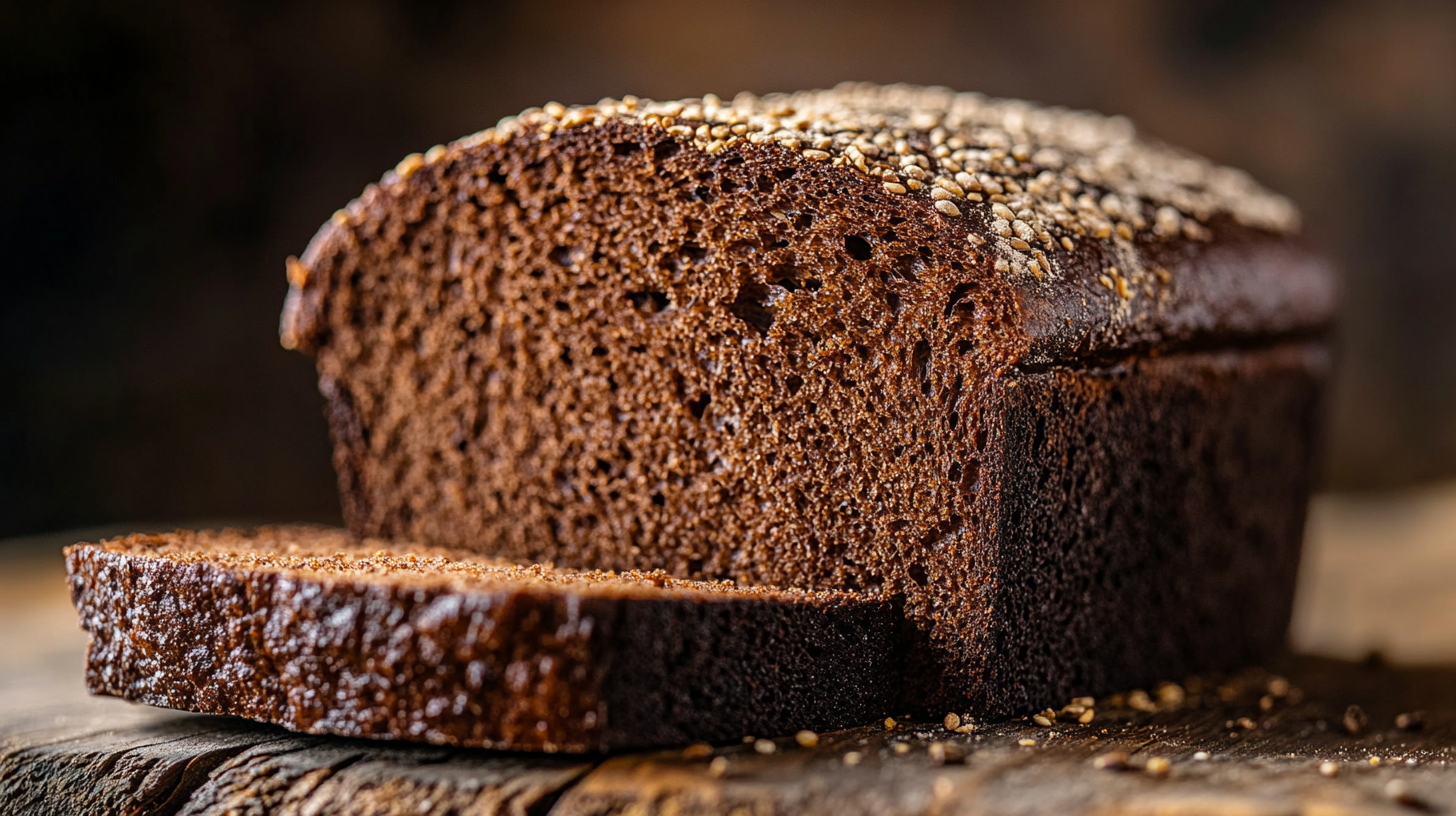
🧬Rye bread, with its earthy and slightly sour flavor profile, is not just a culinary delight but also a potential ally for digestive health. With 1.9 grams of fiber per 100 grams, it supports gut health by acting as a prebiotic, which may enhance the gut-brain axis and improve focus. Additionally, its complex carbohydrate structure helps in maintaining stable energy levels and may assist in blood sugar regulation, making it a wise choice for those mindful of their heart health.
🧑🍳When baking rye bread, consider using a Dutch oven to replicate the steam of a professional oven, which is crucial for achieving a crispy crust. The high hydration level of the dough, ideally between 75-80%, allows gluten to develop without kneading, resulting in a tender crumb. Scoring the dough just before baking directs its expansion, ensuring a beautifully shaped loaf with a characteristic ear.
This post contains affiliate links.
About this article
Foodbe.ai exists to inform consumers about the food they buy and eat. Every claim is cited. Sources: NIH, USDA, FDA, Smithsonian, and JSTOR. Found an error? Email us at admin@foodbe.ai to report any source or fact issues.