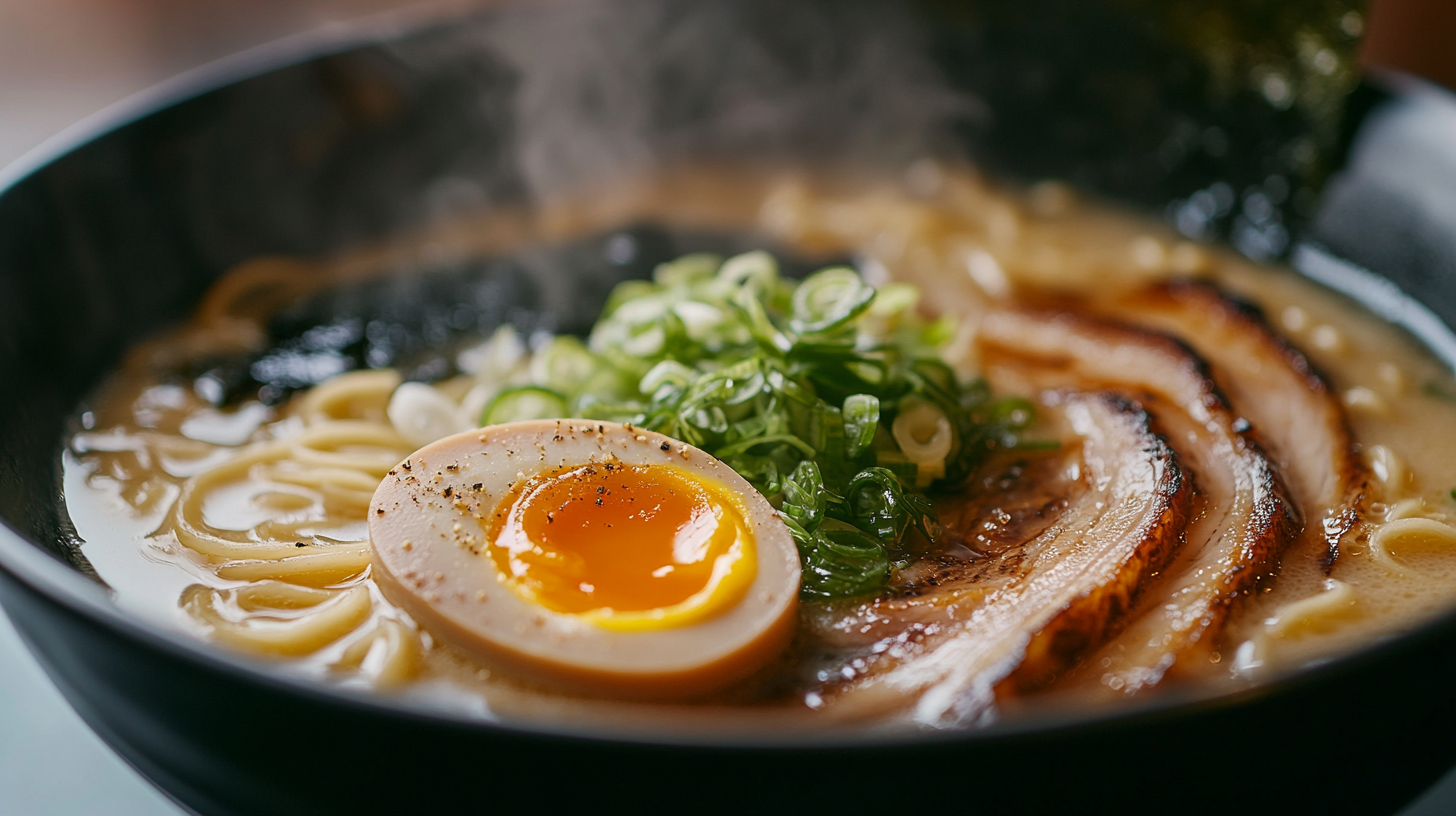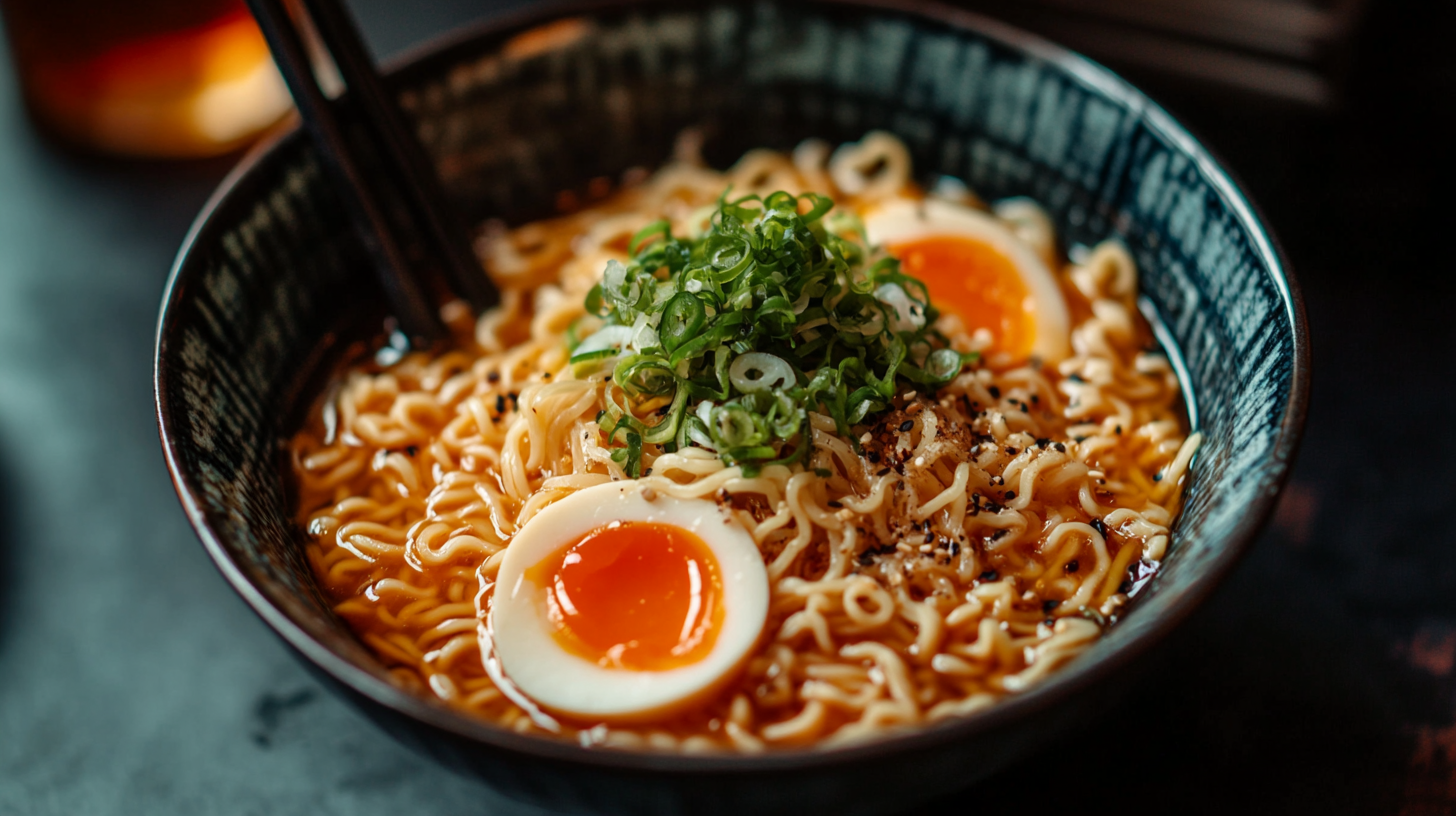
🧬Ramen, a globally beloved grain, offers a savory and umami-rich flavor profile that comforts many. While it contains 10 grams of protein per 100 grams, it is also ultra-processed and low in fiber, which may not support gut health as effectively as whole grains. Research suggests that the high sodium content, at 1810 mg, could be a concern for some, but its comforting qualities make it a popular choice for quick meals.
🧑🍳For a delicious bowl of ramen, consider adding perfectly cooked eggs to enhance your dish. Boil refrigerator-cold eggs for exactly six minutes in already-boiling water, then plunge them into an ice bath for a jammy center. Marinate the eggs overnight in equal parts soy sauce and mirin to infuse deep flavor without compromising texture. This technique ensures a satisfying addition to your ramen.
This post contains affiliate links.
About this article
Foodbe.ai exists to inform consumers about the food they buy and eat. Every claim is cited. Sources: NIH, USDA, FDA, Smithsonian, and JSTOR. Found an error? Email us at admin@foodbe.ai to report any source or fact issues.