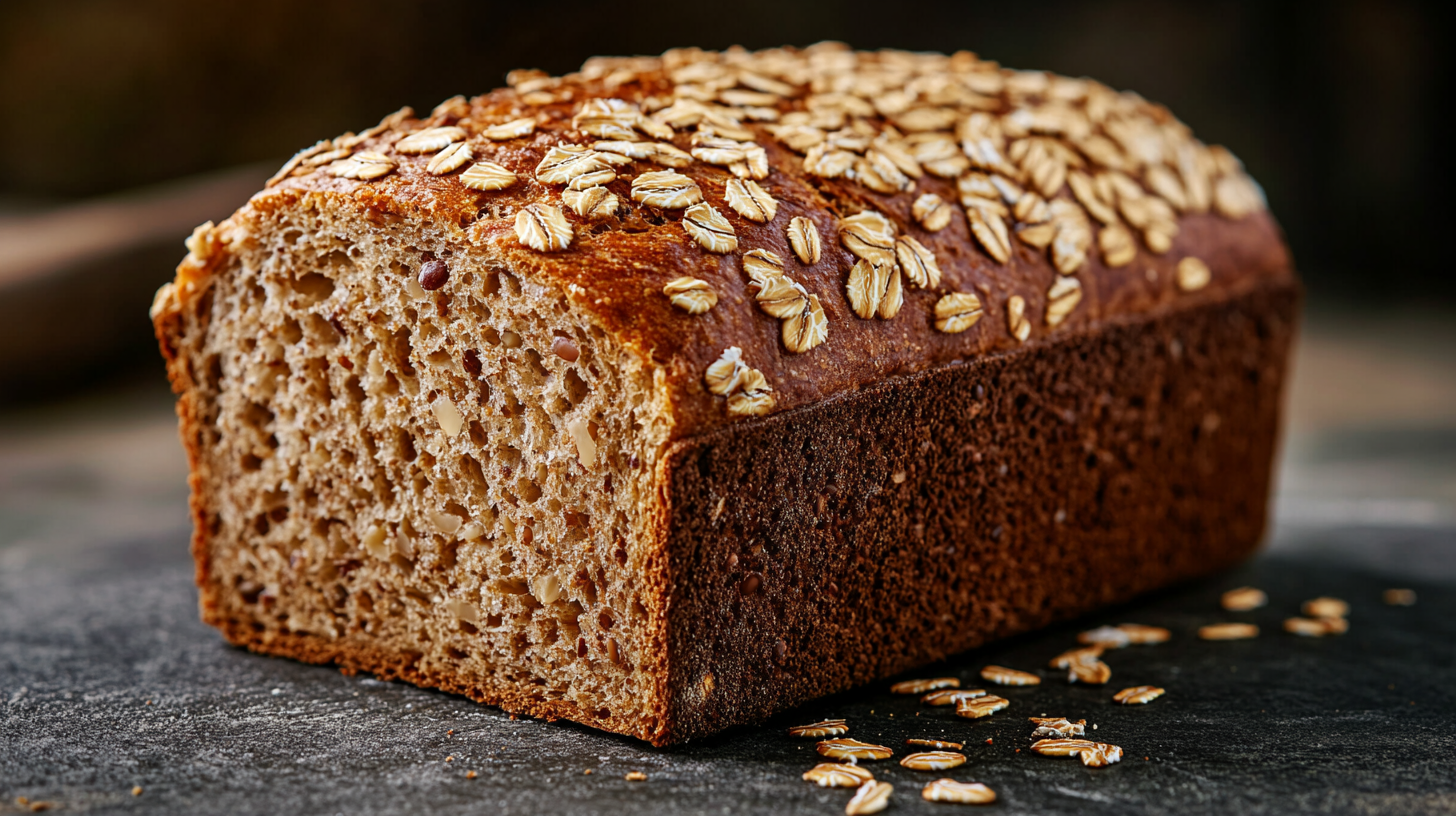
🧬Multigrain bread offers a complex flavor profile characterized by its nutty and slightly sweet notes, making it a satisfying choice for various meals. With 4 grams of protein per 100 grams, this hearty bread can contribute to digestive health and blood sugar balance, thanks to its whole grain and fiber content. Research suggests that the fiber in multigrain varieties may support gut health and enhance focus through the gut-brain axis, promoting sustained energy levels throughout the day.
🧑🍳When baking multigrain bread, consider using a Dutch oven to replicate the steam of professional ovens, which helps achieve a beautifully crackling crust. The dough's hydration level is crucial; maintaining a hydration of 75–80% allows gluten to develop without kneading, resulting in a light, airy loaf. Scoring the dough before baking directs its expansion, ensuring an even rise and a delightful ear on the crust.
This post contains affiliate links.
About this article
Foodbe.ai exists to inform consumers about the food they buy and eat. Every claim is cited. Sources: NIH, USDA, FDA, Smithsonian, and JSTOR. Found an error? Email us at admin@foodbe.ai to report any source or fact issues.