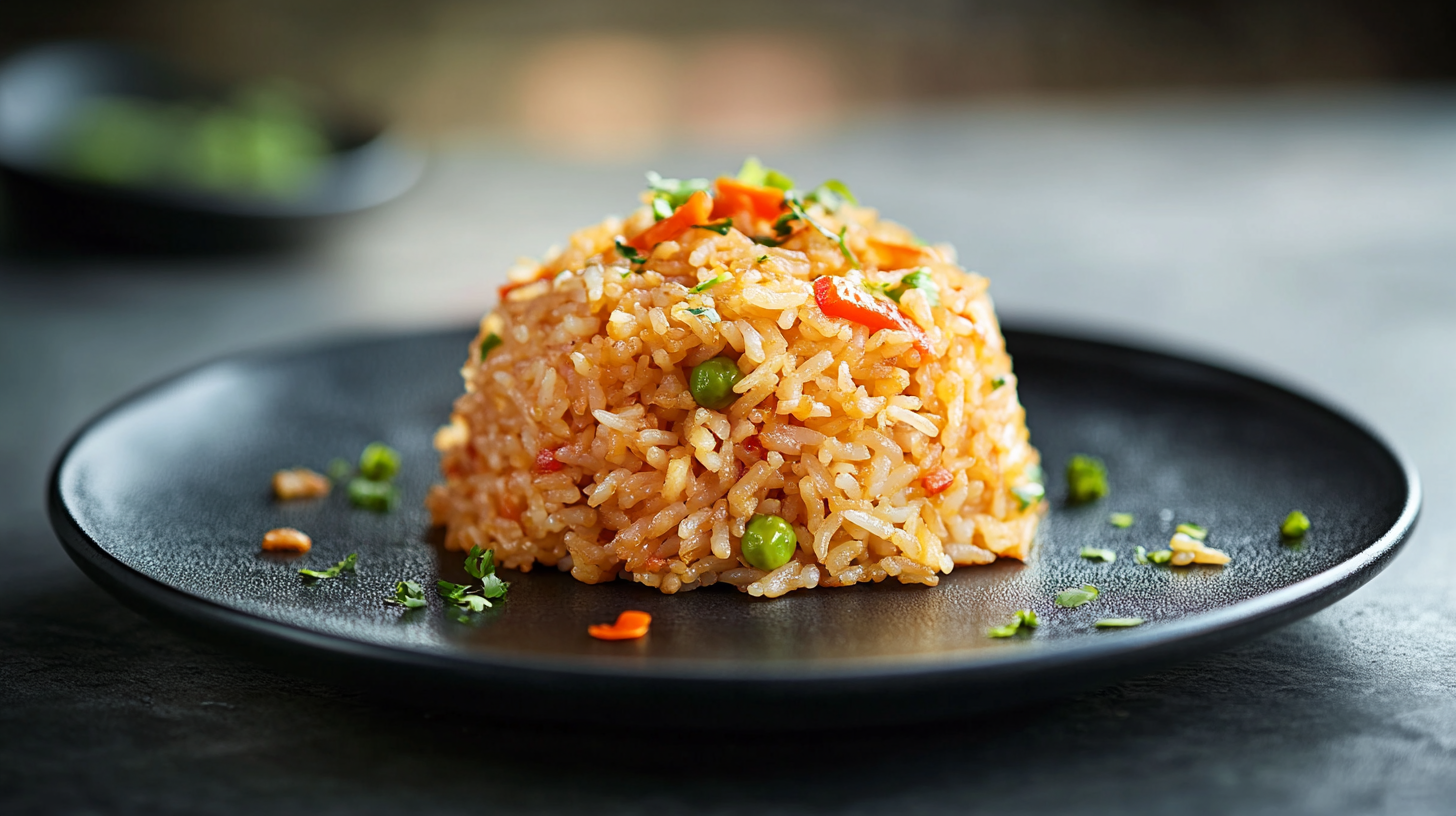
🧬Fried rice is a versatile dish that offers a savory, umami flavor profile while providing moderate fiber content, making it a gut-neutral option. With approximately 9 grams of protein per 100 grams, it serves as a satisfying meal that can support various dietary needs, including vegan and vegetarian diets. Research suggests that grains like rice can play a role in gut health, contributing to overall well-being.
🧑🍳To achieve the perfect fried rice, start with rice that has been refrigerated uncovered for several hours; this helps to dry out the grains, enhancing their ability to fry without becoming mushy. Preheat your wok or pan until it is screaming hot to ensure that the Maillard reaction occurs quickly, creating that desirable caramelization. Finally, pour soy sauce around the edge of the wok rather than directly on the rice, allowing it to hit the hot surface first for optimal flavor integration. Use these techniques for a delicious result.
This post contains affiliate links.
About this article
Foodbe.ai exists to inform consumers about the food they buy and eat. Every claim is cited. Sources: NIH, USDA, FDA, Smithsonian, and JSTOR. Found an error? Email us at admin@foodbe.ai to report any source or fact issues.