June 4, 2026
👖 Does spicy food make GLP-1 side effects worse?
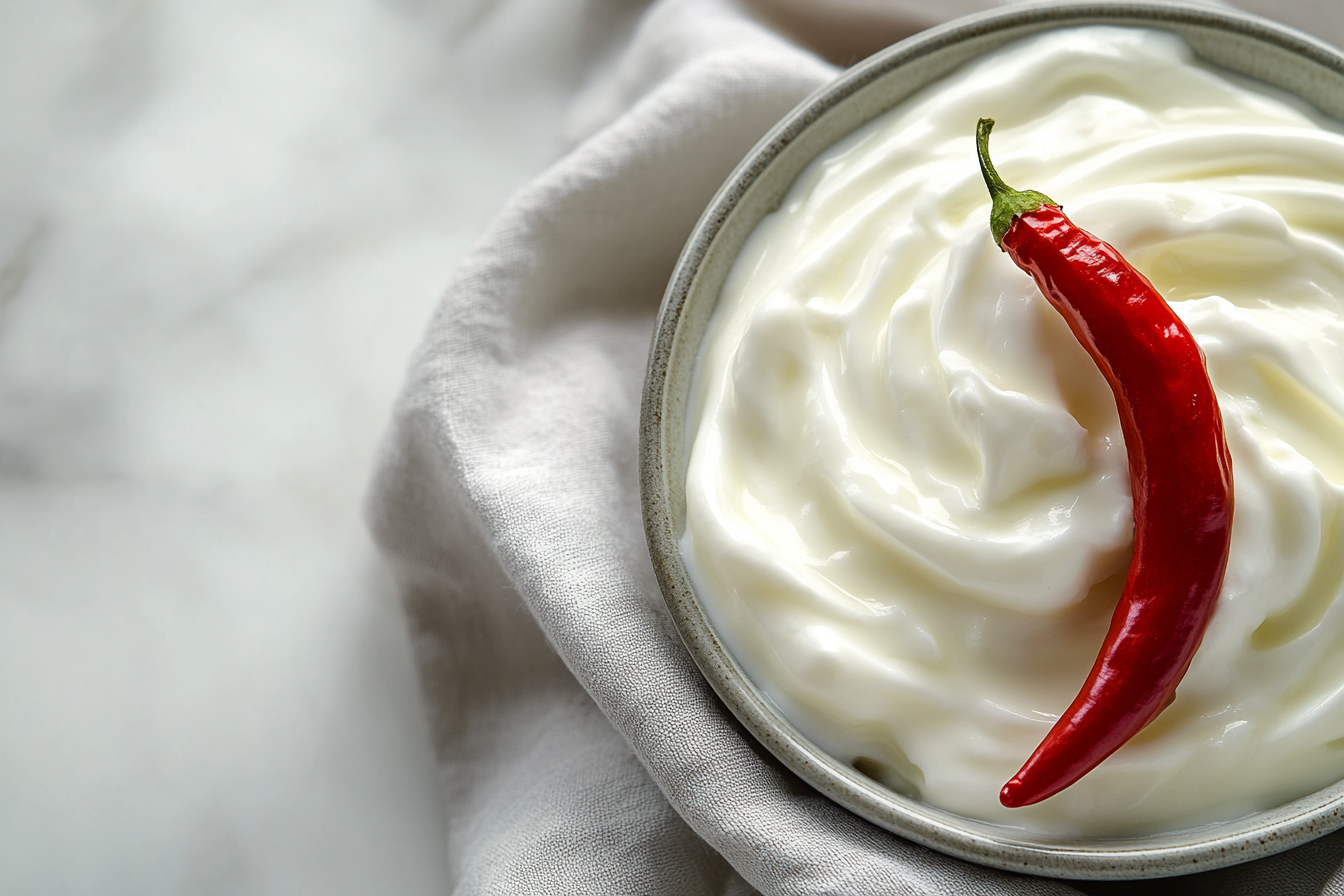
The burning sensation in your stomach is not entirely psychological. Capsaicin — the compound that makes food hot — activates TRPV1 receptors in the gastric mucosa. On GLP-1 where gastric emptying is already slowed, that irritation may feel more pronounced than it would with normal digestion.
Not everyone reacts the same way. Individual tolerance to capsaicin varies significantly based on baseline gastric sensitivity and prior dietary exposure. Some people find it reliably triggers reflux and nausea; others consume spicy food regularly with few complaints.
On higher-nausea days, reducing spicy foods may improve tolerability. On better days it's worth testing in small amounts — a few drops of hot sauce in a bland meal is less likely to overwhelm than a fully spicy dish.
Dairy often helps more than water. Capsaicin is fat-soluble, and dairy proteins have been shown to bind capsaicin and reduce the burning sensation. A spoonful of 🥛 Greek yogurt or a sip of cold milk can reduce the burn more effectively than water.

This post contains affiliate links.
About this article
Foodbe.ai exists to inform consumers about the food they buy and eat. Every claim is cited. Sources: NIH, USDA, FDA, Smithsonian, and JSTOR. Found an error? Email us at admin@foodbe.ai to report any source or fact issues.