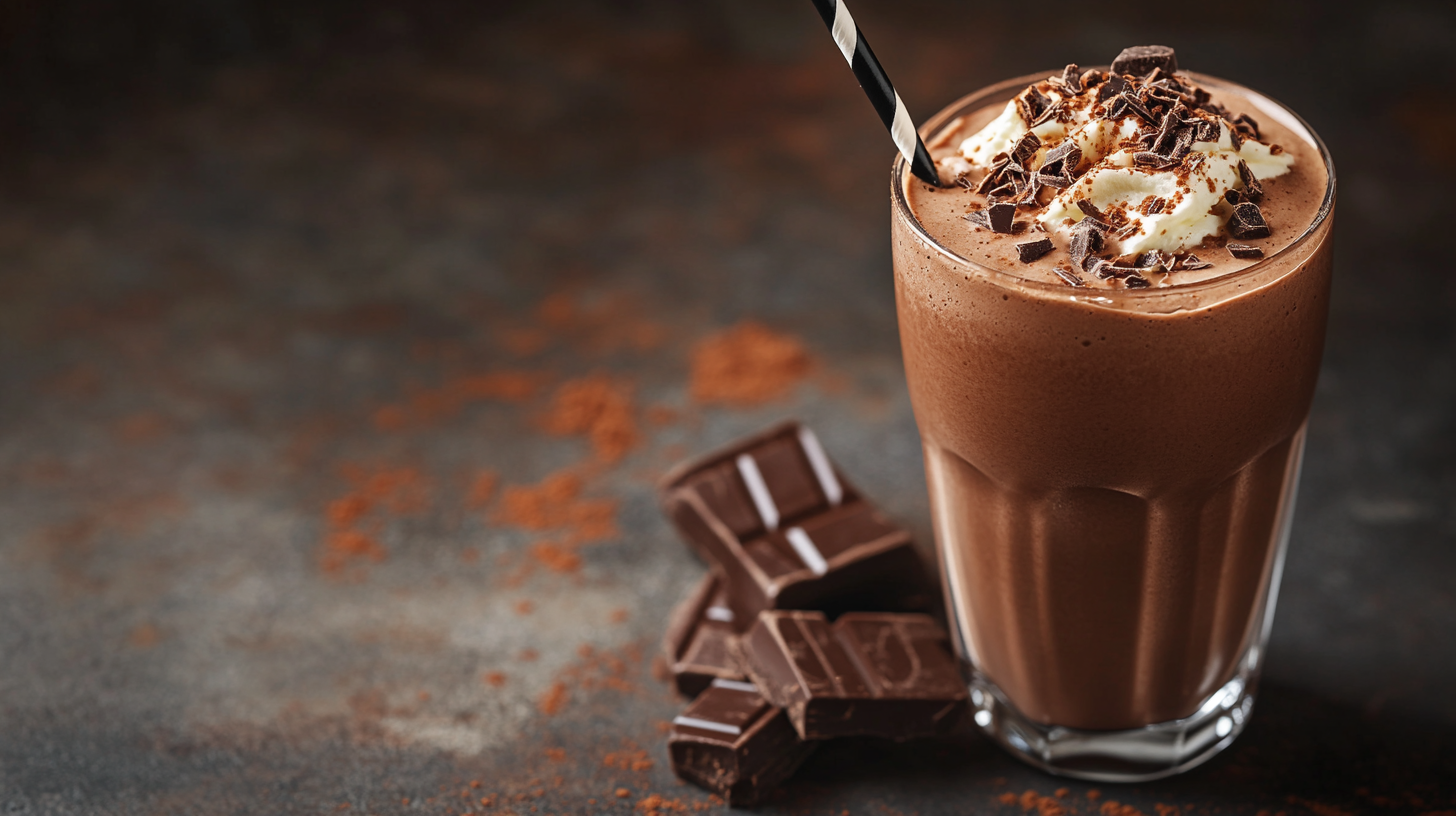
🧬Chocolate milkshakes are a delightful blend of flavors that stimulate the brain's pleasure centers, triggering dopamine release and providing an energy boost. With 296 calories per 100 grams, this indulgent treat can serve as a quick source of carbohydrates, potentially enhancing mood and offering comfort. However, the presence of added sugars and dairy can also pose challenges for gut health, as they may irritate the mucosal lining and contribute to digestive discomfort.
🧑🍳When crafting a chocolate milkshake, the choice of chocolate is crucial; high-cacao varieties can introduce bitterness that can be managed through technique. Incorporating a pinch of salt can effectively suppress bitterness, allowing the rich chocolate flavor to shine through. Properly tempering the chocolate ensures a smooth melt at body temperature, enhancing the overall experience of this creamy beverage.
This post contains affiliate links.
About this article
Foodbe.ai exists to inform consumers about the food they buy and eat. Every claim is cited. Sources: NIH, USDA, FDA, Smithsonian, and JSTOR. Found an error? Email us at admin@foodbe.ai to report any source or fact issues.