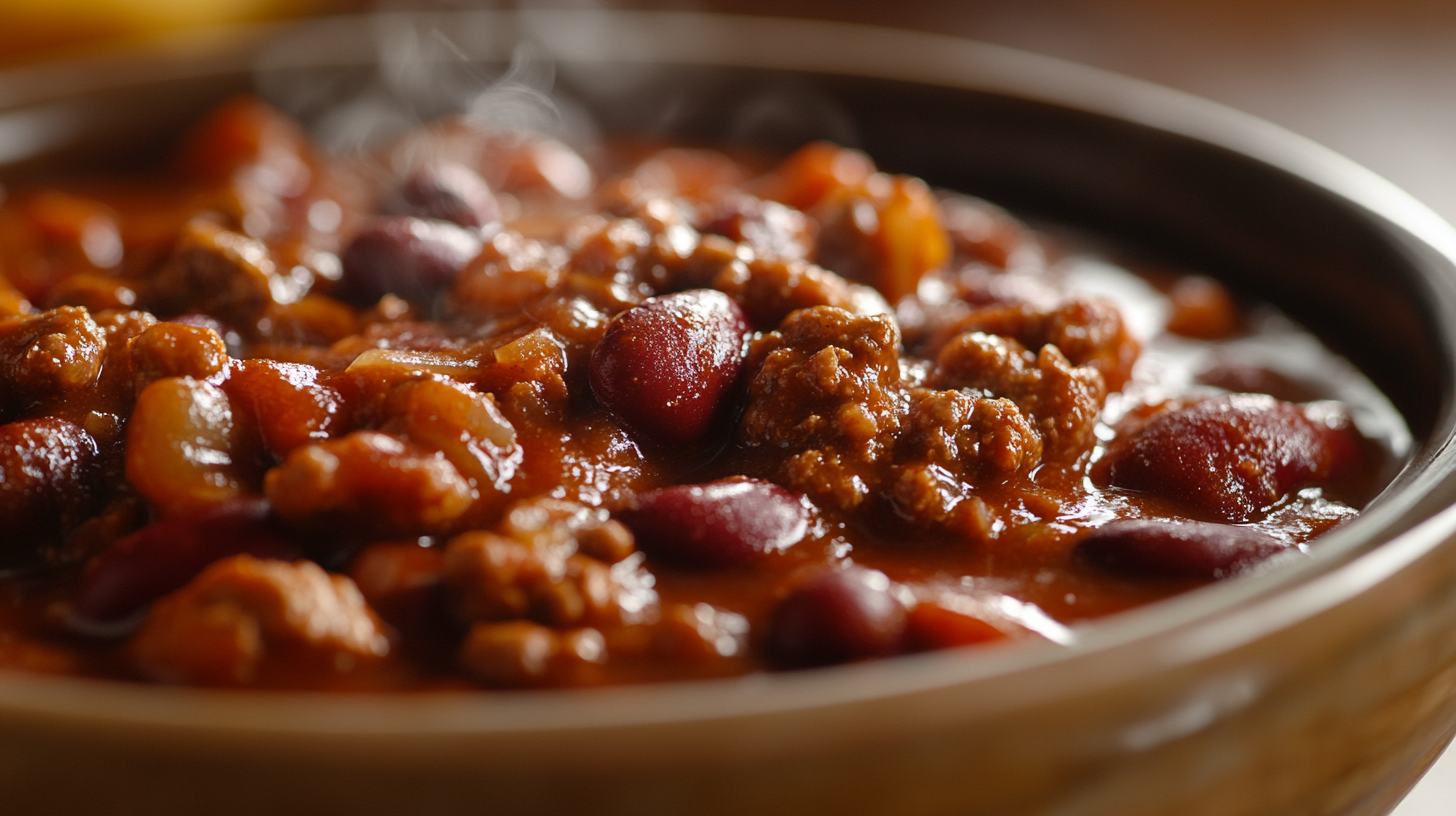
🧬Chili is a robust dish that embodies a spicy, savory, and smoky flavor profile, making it a favorite in both Mexican and American cuisine. The presence of capsaicin not only contributes to its heat but may also stimulate the release of dopamine, creating a rewarding experience for the palate. With 20 grams of protein per 100 grams, chili serves as a hearty option that supports gut health through its fiber-rich legume content, while also offering antioxidant properties that may promote heart health.
🧑🍳In the kitchen, chili crisp is best used as a finishing touch rather than a cooking ingredient, as heating it can compromise its delightful crunch. For a vibrant chili crisp vinaigrette, whisk together one tablespoon of chili crisp with two tablespoons of rice vinegar and one tablespoon of neutral oil, creating a flavorful dressing perfect for cold dishes. Blooming additional aromatics like garlic or ginger in the chili crisp oil before use can enhance the overall flavor without losing the freshness.
This post contains affiliate links.
About this article
Foodbe.ai exists to inform consumers about the food they buy and eat. Every claim is cited. Sources: NIH, USDA, FDA, Smithsonian, and JSTOR. Found an error? Email us at admin@foodbe.ai to report any source or fact issues.