June 4, 2026
👖 Can food mimic GLP-1 effects naturally?
Noon. Nothing eaten yet. Not hungry. That's the medication working — and also the problem.
Most people on GLP-1 are eating far less than they realize. The appetite suppression is that complete. What doesn't get talked about enough is what's missing from those smaller meals — specifically protein, which needs to hit 1.2 grams per kilogram of body weight per day regardless of how little appetite there is.
GLP-1 cuts hunger through hypothalamic and vagal pathways — the medication is doing something physiologically significant. What it doesn't do is lower protein requirements — and the gap between what's needed and what's actually eaten on these medications is well documented.
Food does not replicate the magnitude of GLP-1 medications — the pharmaceutical effect is significantly stronger than anything diet produces. But certain foods do stimulate the body's own GLP-1 release in meaningful ways, and eating patterns built around those foods can support appetite regulation, fullness, and metabolic health through some overlapping biological pathways.
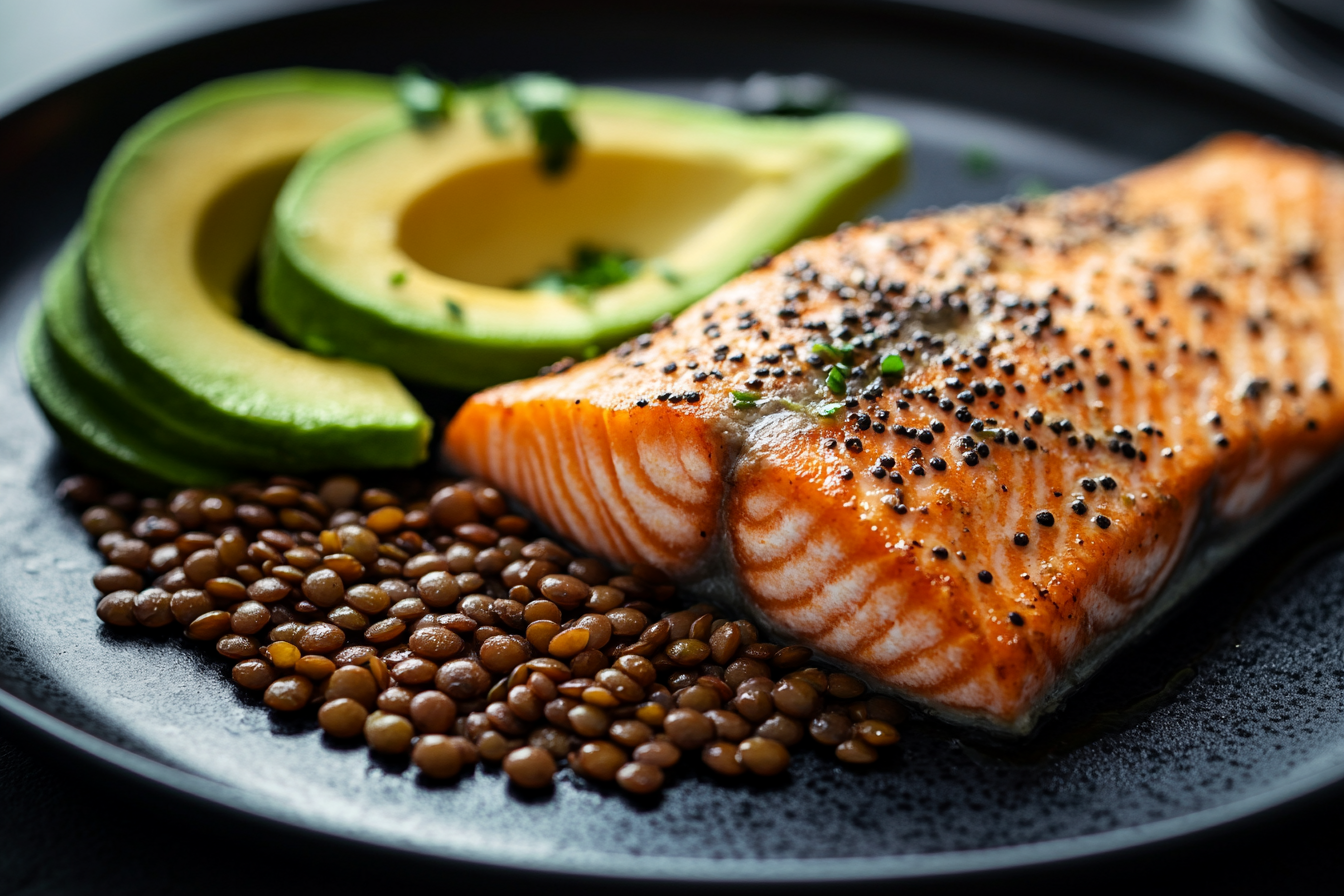
Protein and dietary fat are among the dietary components that stimulate intestinal L-cell GLP-1 secretion via nutrient sensing receptors and vagal pathways. Meals combining protein, fiber, and fat may support a broader endogenous satiety response than any one component alone.

This post contains affiliate links.
About this article
Foodbe.ai exists to inform consumers about the food they buy and eat. Every claim is cited. Sources: NIH, USDA, FDA, Smithsonian, and JSTOR. Found an error? Email us at admin@foodbe.ai to report any source or fact issues.