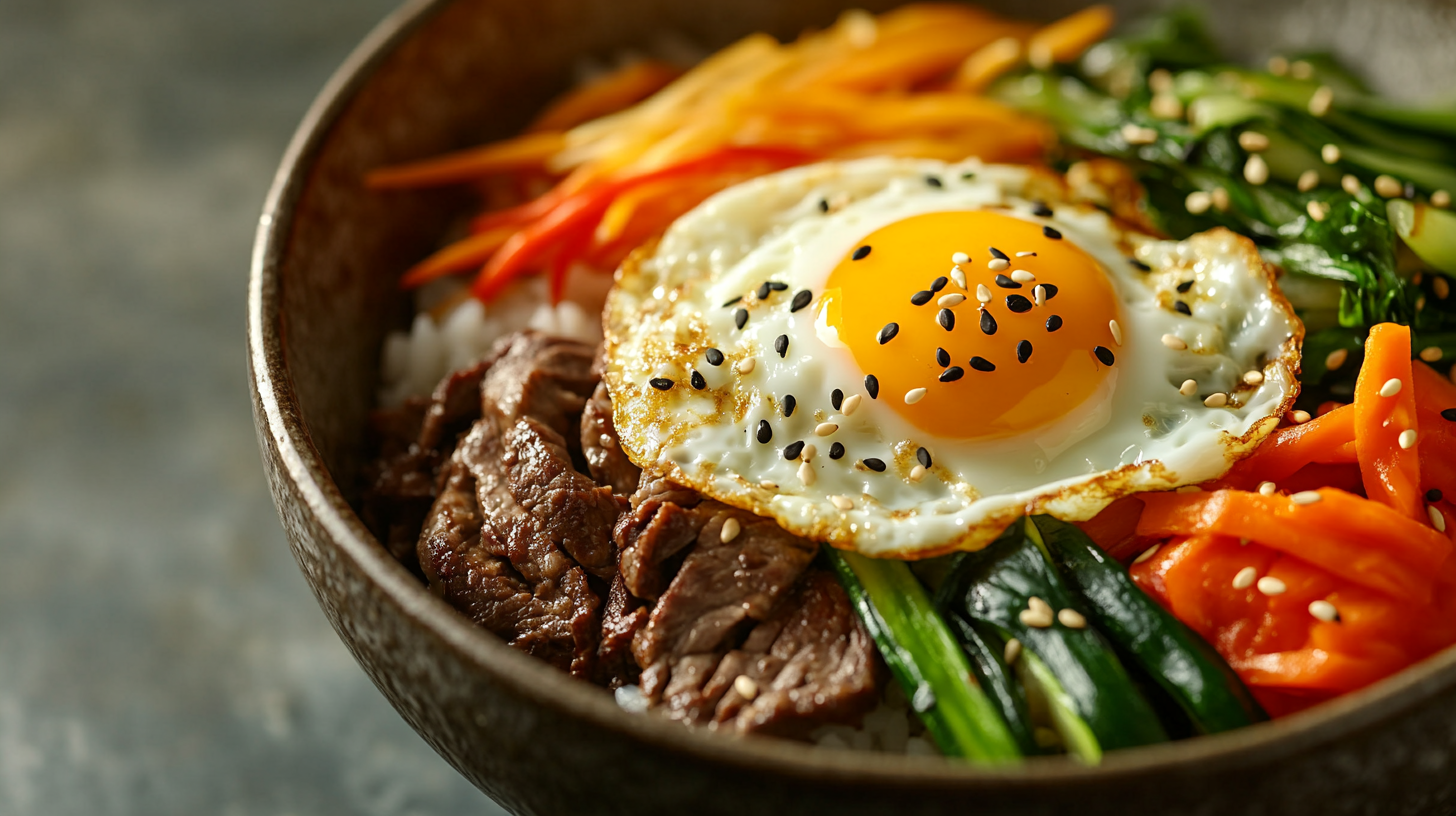
🧬Bibimbap is a vibrant dish that not only pleases the palate but also engages the brain through its colorful presentation. The combination of ingredients, including vegetables and proteins, contributes to a satisfying flavor profile rich in umami and spice, with a notable protein content of 15 grams per 100 grams. This sensory experience can trigger a color-reward response, enhancing the overall enjoyment of the meal while providing energy and fiber that may support gut health.
🧑🍳When preparing bibimbap, focus on achieving a balance of flavors and textures by sautéing vegetables separately to retain their individual characteristics. Using a hot stone bowl can create a delightful crispy rice layer, while a spicy gochujang sauce adds depth and heat. Layering the ingredients thoughtfully not only enhances the visual appeal but also ensures that every bite is a harmonious blend of savory and spicy notes. Mastering this technique will result in a truly satisfying rice bowl.
This post contains affiliate links.
About this article
Foodbe.ai exists to inform consumers about the food they buy and eat. Every claim is cited. Sources: NIH, USDA, FDA, Smithsonian, and JSTOR. Found an error? Email us at admin@foodbe.ai to report any source or fact issues.